Javier Mendoza  /  The Animals  /  Land
Primates · Land

Olive Baboon

Papio anubis

Baboons live in troops of dozens to over a hundred, and getting on in one is a matter of alliances, grooming and knowing who ranks where.

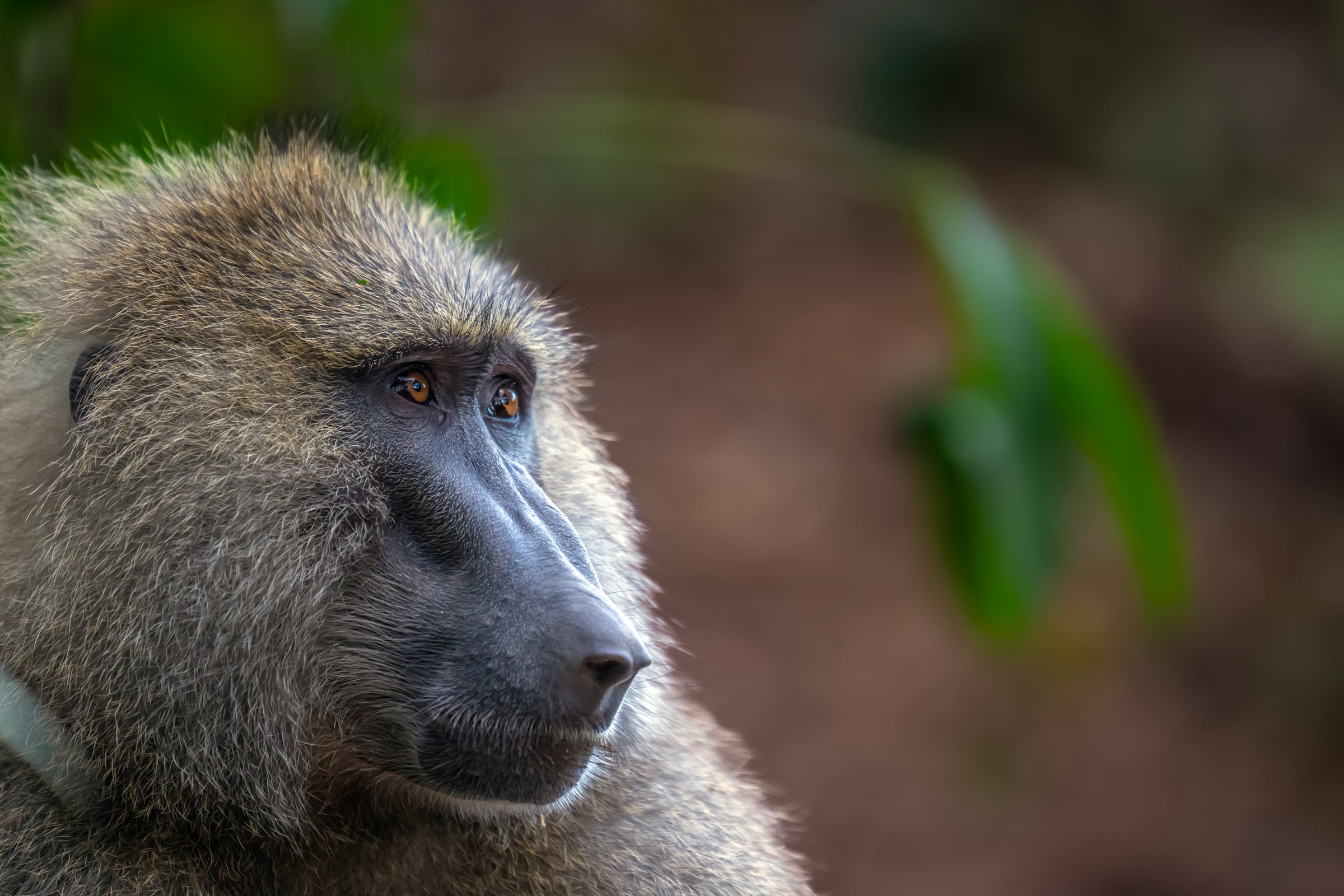
A close profile portrait of an olive baboon, its amber eye catching the light against a soft green background.
The Elder · Serengeti · © Javier MendozaOrder this print
15–150
Troop size; large troops split when they grow too big
Smithsonian's National Zoo
Widest
Range of any baboon, across 25 African countries
IUCN
~50 lb
A big male; females about half that
Smithsonian's National Zoo
Least Concern
IUCN Red List; adaptable and widespread
IUCN

Troop life

Olive baboons eat almost anything, grass, fruit, roots, insects and the occasional small animal, which is why they are the most widespread baboon in Africa. A troop sleeps in trees or on cliffs and spends the day walking and foraging together, the young riding on their mothers' backs.

Rank runs through the females, inherited from mother to daughter, while males compete and form alliances to rise. Long-term studies in Kenya and Tanzania have shown that strong social bonds mean longer lives and more surviving offspring.

In the collection

1 frame · prints from 12″ to 40″+
A close profile portrait of an olive baboon, its amber eye catching the light against a soft green background.
The ElderSerengeti

An olive baboon sits in the morning light, gaze fixed on something beyond the frame — the striking, almost human stillness of a troop at rest.

View & order this print →
Own the photograph
Museum-quality prints from 16-bit masters — metal, canvas or archival fine-art paper, printed in the USA.
Order a print

Questions people ask

What do baboons eat?

Nearly everything: grasses, seeds, fruit, roots, insects, eggs and occasionally small mammals. That flexibility is why they thrive across so much of Africa.

Are baboons dangerous?

Wild baboons generally keep their distance, but a troop used to people and food can become bold. Never feed them, and keep food out of sight near camps.

Sources
  1. IUCN Red List, Papio anubis
  2. Smithsonian's National Zoo: Olive baboon
  3. Amboseli Baboon Research Project (Altmann, Alberts)
More animals
LionThe only cat that lives in a family LeopardThe big cat that hauls its dinner up a tree CheetahThe fastest animal on land African ElephantThe largest animal that walks the Earth All 17 animalsLand & ocean