Javier Mendoza  /  The Animals  /  Land
Big cats · Land

Lion

Panthera leo

Every other big cat hunts alone. Lions hold ground as a pride, and most of what makes them lions comes from that one fact.

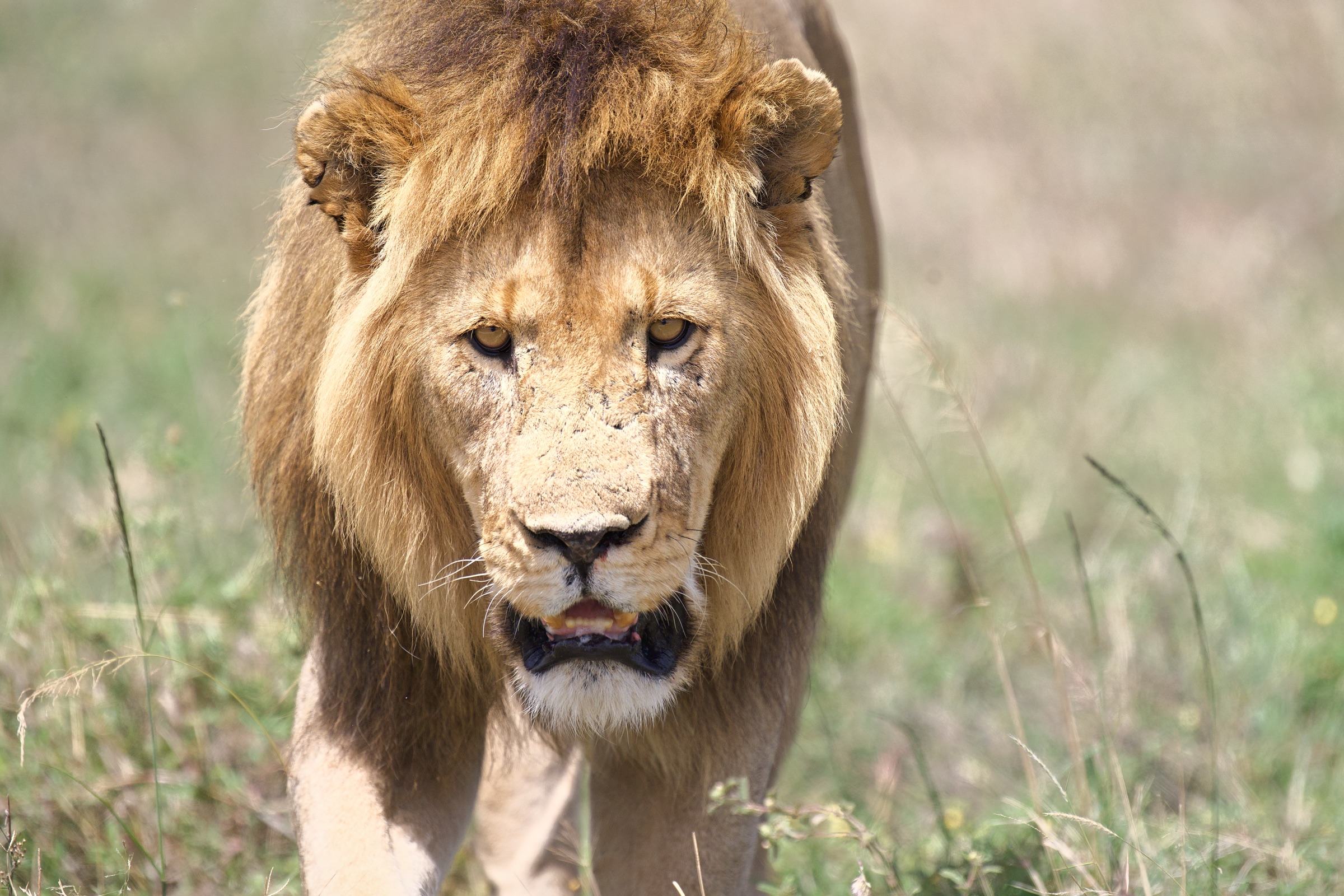
A male lion with a full mane walking directly toward the camera, holding eye contact.
The King · Serengeti · © Javier MendozaOrder this print
~420 lb
A big pride male; females about 280 lb
Smithsonian's National Zoo
5 miles
How far a roar carries on still air, about 8 km
Smithsonian's National Zoo
20 hrs
A lion can rest up to 20 hours a day
National Geographic
Vulnerable
IUCN Red List; roughly 20,000 to 25,000 wild lions left
IUCN

A cat built for company

A pride is a group of related females, their cubs, and a coalition of one to several adult males that holds the territory for a few years before younger males push them out. The females do most of the hunting, often together, and raise cubs communally; the males patrol, roar and fight to keep rivals away. No other wild cat lives this way.

The roar is a territorial broadcast. On a still Serengeti night it carries about five miles, and prides answer each other across the plains. It is also how a lost lion finds the pride again.

The Serengeti

The Serengeti ecosystem of Tanzania and Kenya holds one of the largest lion populations left, several thousand animals following the wildebeest and zebra migration. The Serengeti Lion Project, started in 1966, is the longest-running study of any big cat, and most of what is known about pride life was learned here.

Lions are listed as Vulnerable. Africa has lost roughly half its lions since the mid 1990s to habitat loss, loss of prey and conflict with livestock; the species is now largely confined to protected areas.

In the collection

5 frames · prints from 12″ to 40″+
A male lion with a full mane walking directly toward the camera, holding eye contact.
The KingSerengeti

A pride male comes straight down the lens line, unhurried and unbothered — the quiet confidence of an animal with nothing to fear on his own ground.

View & order this print →
A lioness standing in profile on the open plains.
LionessSerengeti

Caught mid-stride on the short grass, ears turned to a sound only she can hear.

View & order this print →
A lioness on the plains in soft light.
On the PlainsSerengeti

A lioness set small against the vastness of her range, the way the savanna truly feels.

View & order this print →
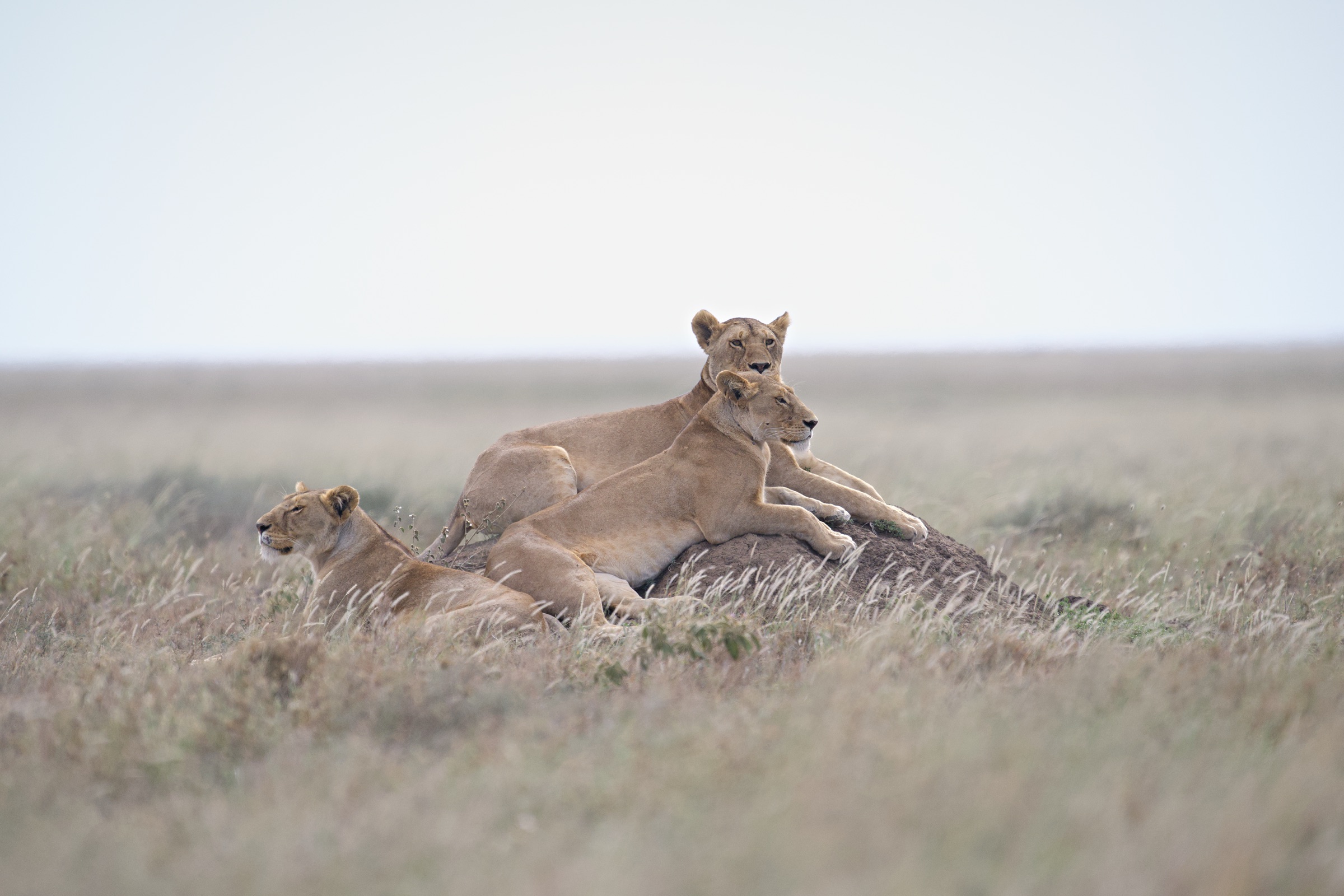
Three lionesses resting together on a termite mound.
The PrideSerengeti

Three sisters share a mound at dawn — the easy closeness of a pride between hunts.

View & order this print →
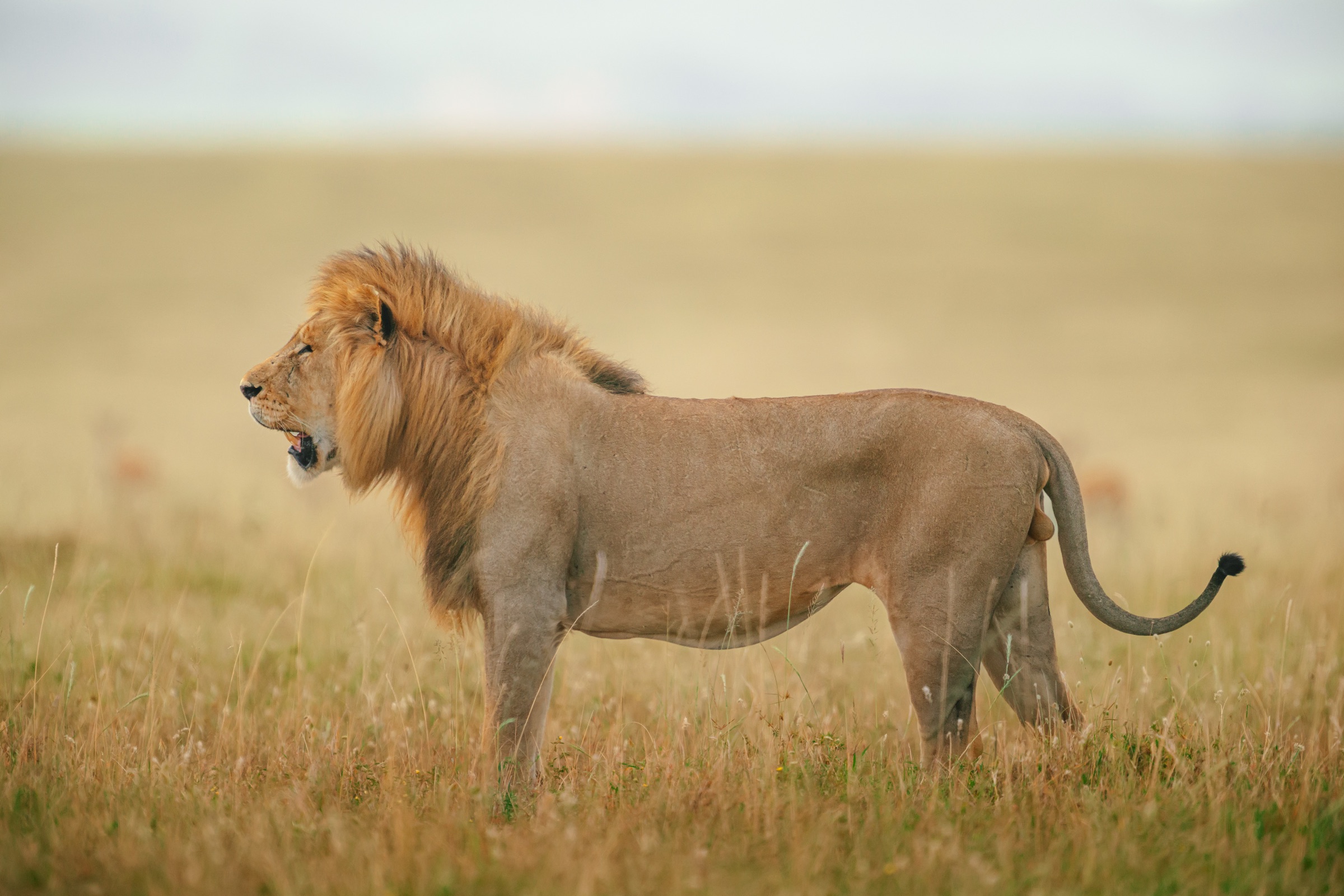
A male lion standing in profile on the open plains, mouth open in a call, his mane lit by low sun.
The CallSerengeti

A pride male stands full-height on the short-grass plain and calls across it — a sound built to carry for miles, meant for lionesses somewhere beyond the heat haze.

View & order this print →
Own the photograph
Museum-quality prints from 16-bit masters — metal, canvas or archival fine-art paper, printed in the USA.
Order a print

Questions people ask

How big is a lion?

Adult males usually weigh 330 to 420 pounds and stand about four feet at the shoulder; the heaviest wild males approach 500 pounds. Females are smaller, around 280 pounds.

How far can a lion's roar be heard?

About five miles (8 km) in still conditions. Males and females both roar, to claim territory and to locate each other.

Are lions endangered?

They are listed as Vulnerable by the IUCN, one step short of Endangered. Rough estimates put wild lions at 20,000 to 25,000, down about half since the 1990s, with West Africa's population critically small.

Sources
  1. IUCN Red List, Panthera leo
  2. Smithsonian's National Zoo: Lion fact sheet
  3. National Geographic: Lion
  4. Serengeti Lion Project, University of Minnesota (Packer)
More animals
LeopardThe big cat that hauls its dinner up a tree CheetahThe fastest animal on land African ElephantThe largest animal that walks the Earth Spotted HyenaNot a scavenger: Africa's most successful hunter All 17 animalsLand & ocean