Javier Mendoza  /  The Animals  /  Land
North America · Land

Brown Bear

Ursus arctos

Every grizzly is a brown bear, but not every brown bear is a grizzly. On the Alaska coast, where the salmon run, the same species grows into something much bigger.

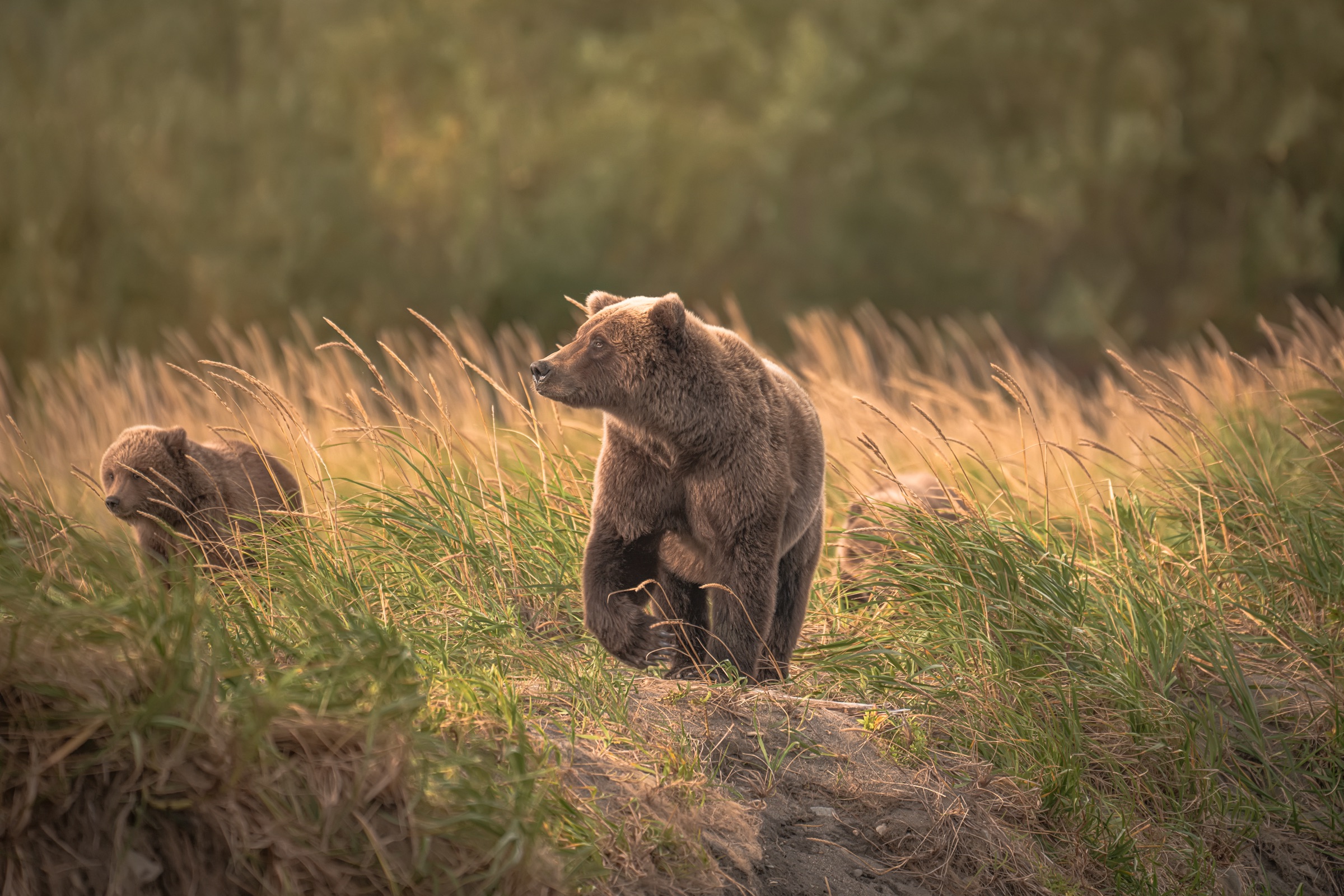
A brown bear sow stands in tall golden grass at last light, looking back over her shoulder, with her cub half hidden in the grass behind her.
The Guardian · Alaska · © Javier MendozaOrder this print
~30,000
Brown bears in Alaska, most of the United States' total
Alaska Department of Fish and Game
1,000+ lb
A big coastal male in autumn; inland grizzlies run far smaller
National Park Service
~1 lb
A cub at birth, in the den in midwinter
National Park Service
Least Concern
IUCN Red List; healthy in Alaska, lost from most of the Lower 48
IUCN

Grizzly or brown bear?

They are one species. In Alaska the convention is simple: bears with access to the coast and its salmon are called brown bears, bears of the interior are called grizzlies. The coastal animals eat better and get much larger, which is why the biggest brown bears on Earth live on the Alaska Peninsula and Kodiak.

Late summer is the eating season. With the salmon running, a coastal bear can put away dozens of fish a day, building the fat it needs to survive five or six months in the den without eating or drinking.

The sow and the cub

Cubs are born in the den in January or February, blind and about a pound, and come out in spring having grown on milk alone. They stay with their mother for two or three summers, learning where the fish run and which bears to avoid. A sow with cubs is the most watchful animal on the coast: she stands, looks, sniffs, and moves the family on long before anyone else sees a reason to.

That is the frame here: a sow on a grassy rise in the last light, head turned to something out of sight, her cub tucked into the grass behind her. On the Alaska coast the bears are habituated to people at a distance and go about their business; the photographer's job is to stay still, stay low, and let her decide.
In the collection

5 frames · prints from 12″ to 40″+
A brown bear sow stands in tall golden grass at last light, looking back over her shoulder, with her cub half hidden in the grass behind her.
The GuardianAlaska

A sow pauses on the rise in the last warm light, head turned to whatever she heard, her cub tucked into the grass at her back — the whole frame holding its breath with her.

View & order this print →
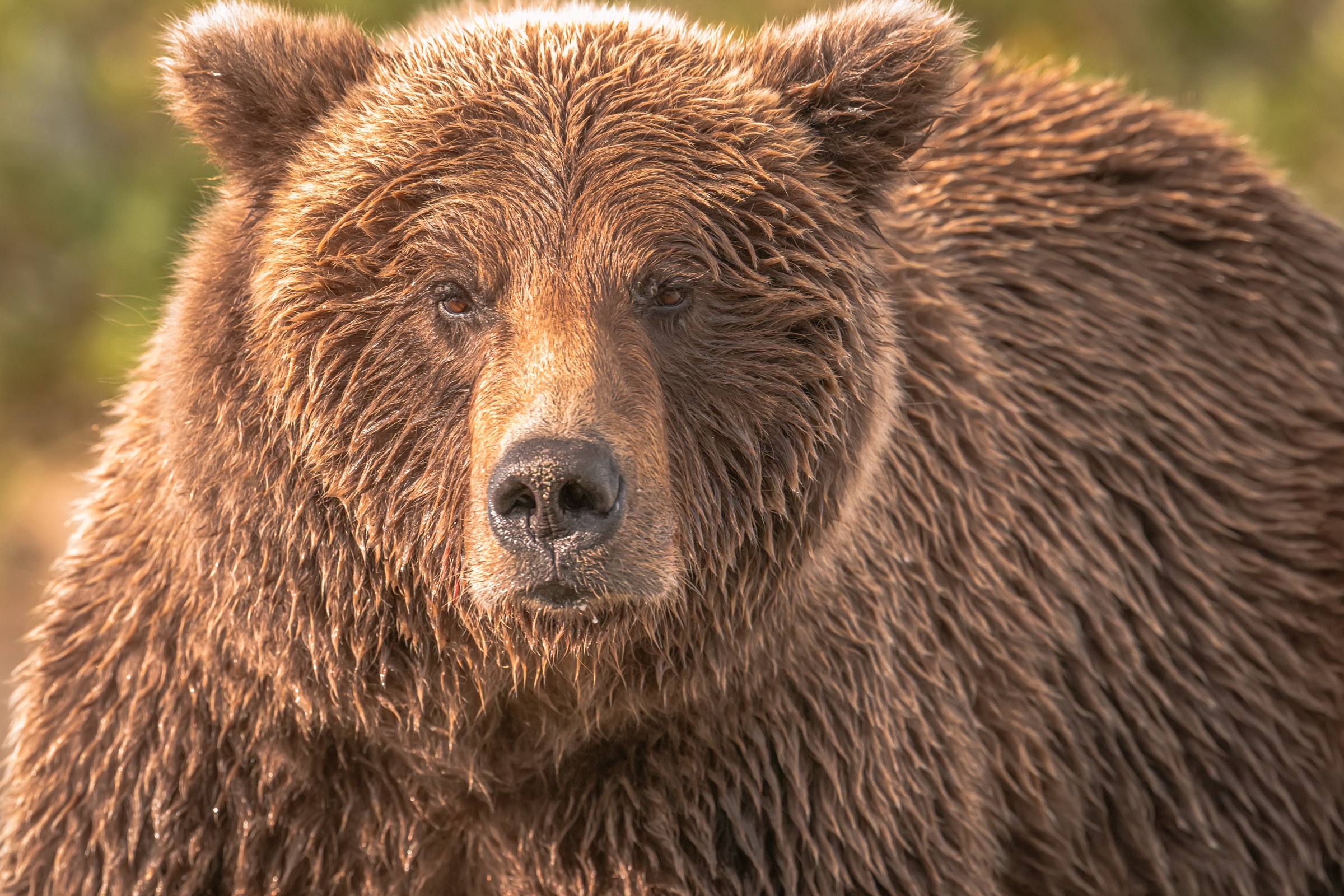
A tight portrait of a wet brown bear looking straight into the camera, fur lit from behind by low sun.
The StareAlaska

Fresh out of the river, fur still dripping, a brown bear levels its gaze at the lens — the kind of look that decides, in a second, whether you are worth any more attention.

View & order this print →
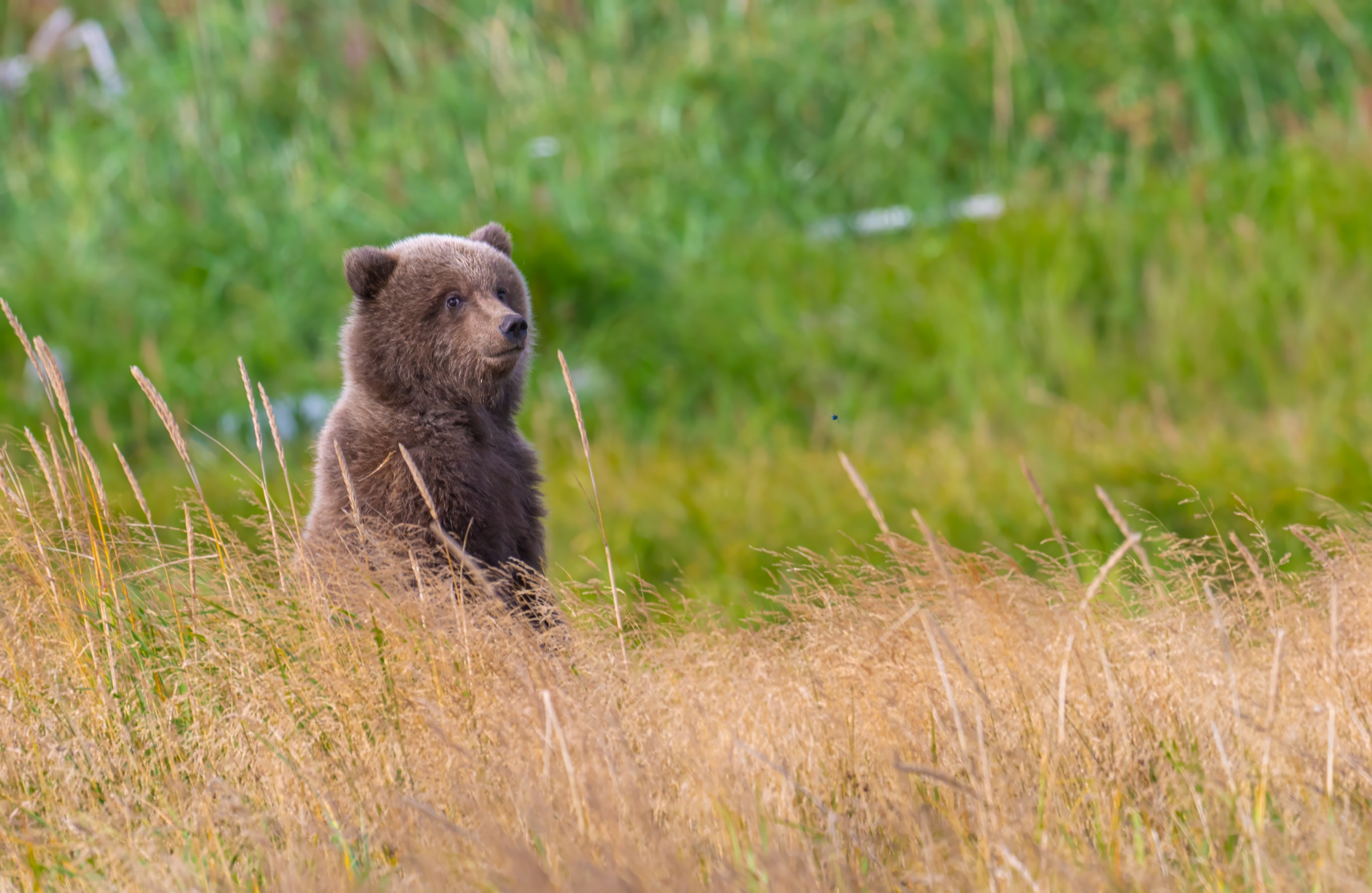
A brown bear cub standing upright in tall dry grass, looking off to the side against a green hillside.
The LookoutAlaska

A cub rises onto its hind legs in the dry grass to see over it, chin up, ears forward — a few seconds of looking before it drops back down and follows its mother.

View & order this print →
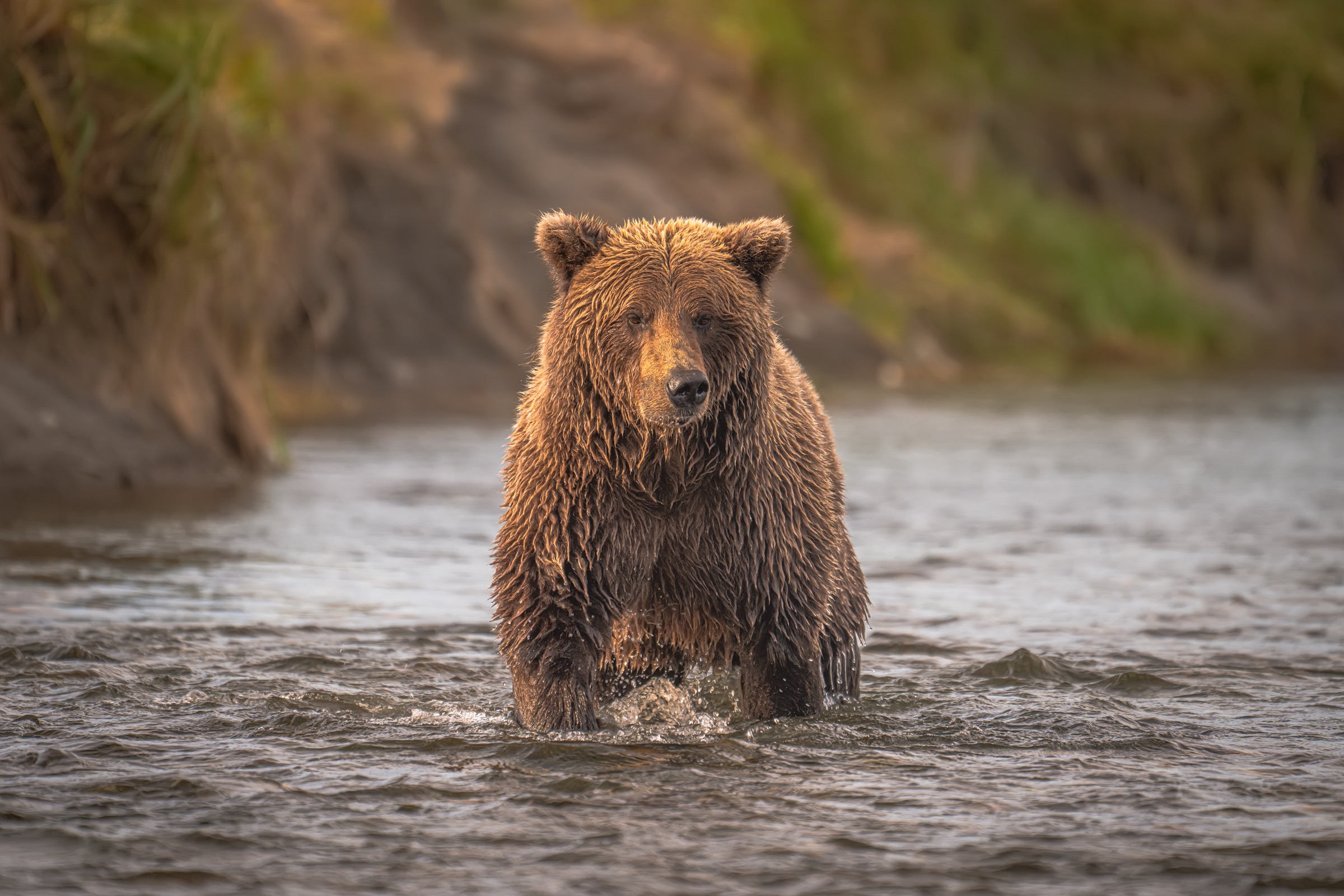
A large brown bear wading straight toward the camera through a shallow river, water running off its coat in the evening light.
The CrossingAlaska

A big bear comes up the river in the last light, water streaming from its coat, walking the shallows the way the salmon do — slowly, and with nothing to hurry for.

View & order this print →
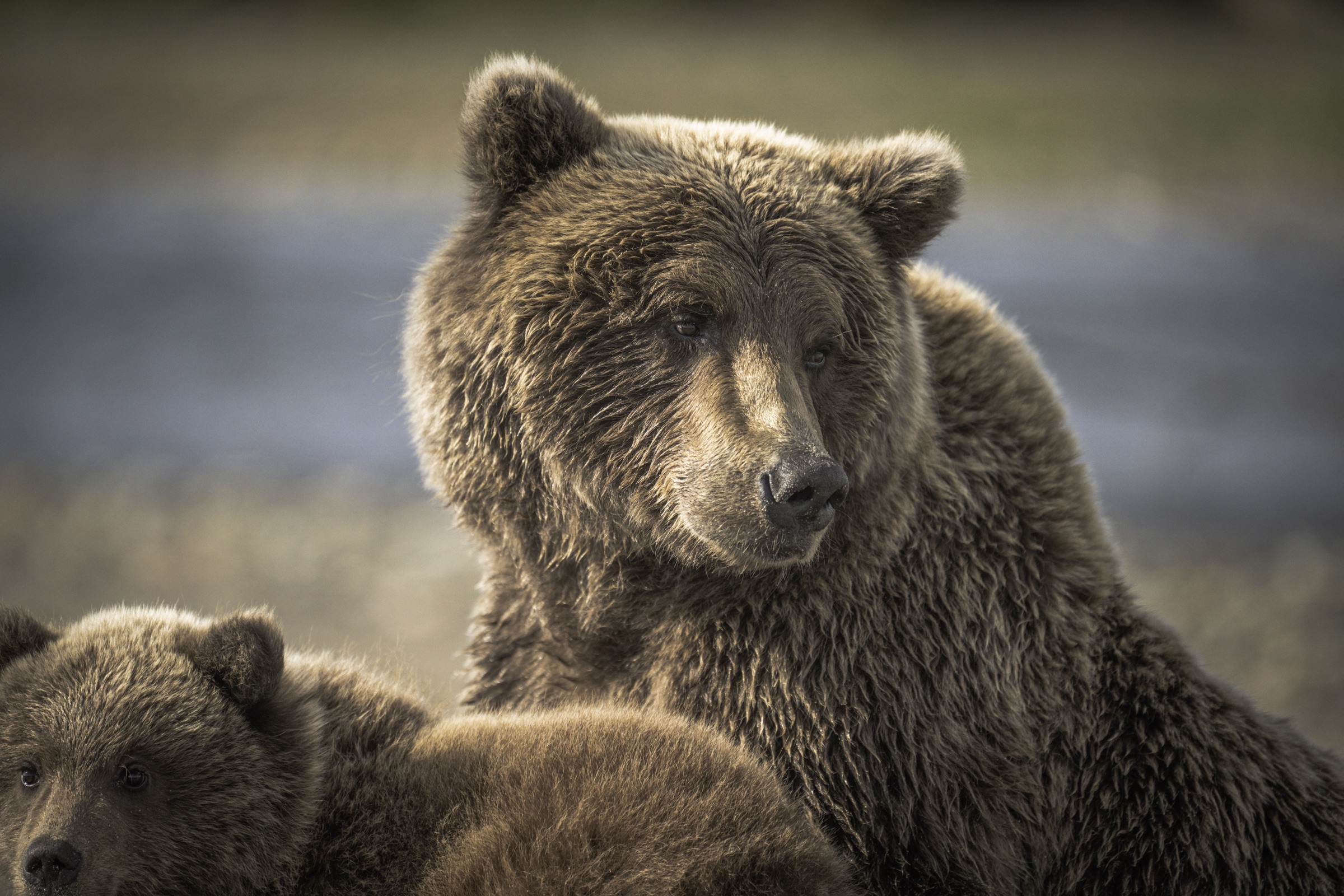
A brown bear sow in close profile, head turned to watch something, with her cub resting against her in the foreground.
The MatriarchAlaska

Her cub settles against her flank and she keeps watch over its head, the whole of her attention on the shoreline — the quiet, constant work of a mother bear.

View & order this print →
Own the photograph
Museum-quality prints from 16-bit masters — metal, canvas or archival fine-art paper, printed in the USA.
Order a print

Questions people ask

What is the difference between a grizzly and a brown bear?

Nothing, biologically; both are Ursus arctos. In Alaska, bears of the coast with salmon in their diet are called brown bears, and interior bears are called grizzlies. The coastal bears are much larger.

How big do Alaska brown bears get?

A large coastal male can weigh more than 1,000 pounds in autumn, at the end of the salmon run. Sows are smaller, usually a third to half of that. Interior grizzlies are smaller still.

How long do cubs stay with their mother?

Usually two to three years. The sow does not breed again while she has cubs with her, so a female may raise only a handful of litters in her life.

Sources
  1. Alaska Department of Fish and Game: Brown Bear species profile
  2. National Park Service, Katmai: Brown Bear Frequently Asked Questions
  3. National Park Service, Lake Clark: Brown Bears
  4. IUCN Red List, Ursus arctos
More animals
LionThe only cat that lives in a family LeopardThe big cat that hauls its dinner up a tree CheetahThe fastest animal on land African ElephantThe largest animal that walks the Earth All 18 animalsLand & ocean