We planned this trip the way you plan around a single tide. Everything else — the flights, the nights in Homer, the boat — was arranged so that if the weather closed in on Wednesday, the bears were still possible on Thursday. On Wednesday morning the weather closed in. The bear flight was off. So we swapped the days, pulled the bay cruise forward, and went to sea instead.
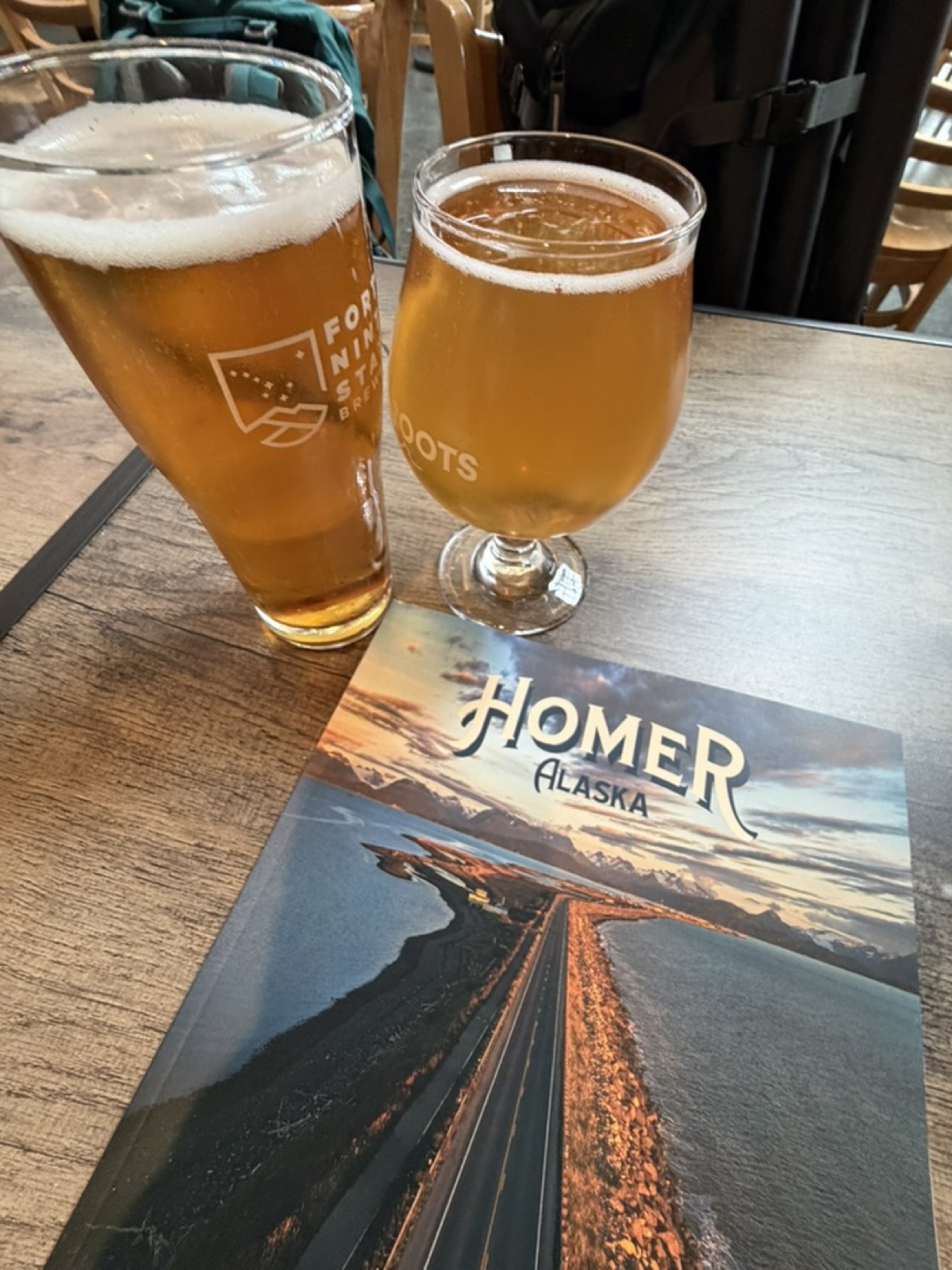
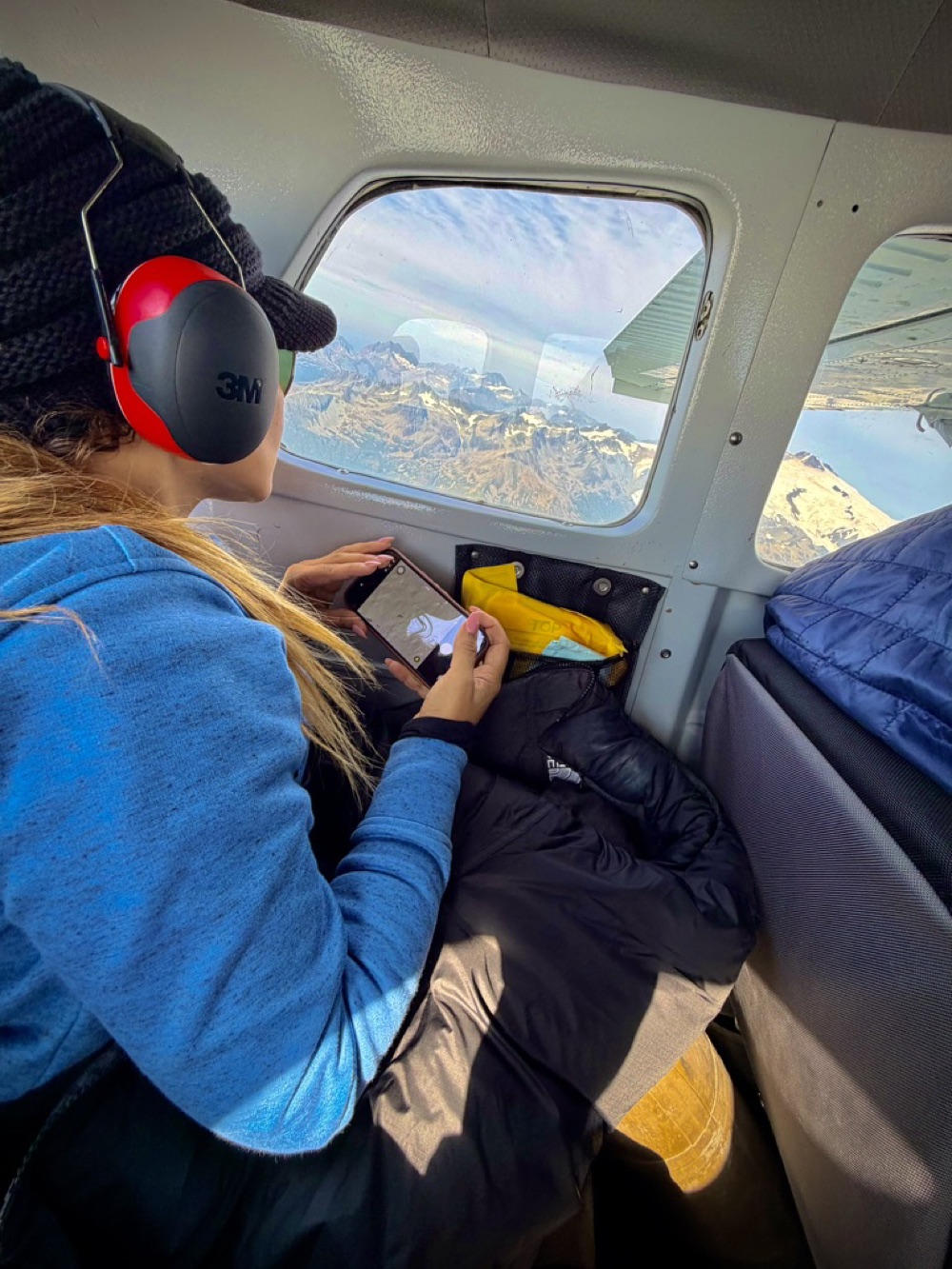
Homer is a small town at the end of the road, sitting on a spit of gravel that runs four miles out into Kachemak Bay. We had come in the afternoon before on a forty-minute prop flight from Anchorage, low over the bluffs and the green farms above the water, and spent the evening with two local beers and a book about the town open on the table between us.
The bay gave us a humpback that surfaced once and stayed down, sea otters floating on their backs in the foam below the rocks, and a long slow run home into the sun with the 400mm resting on the rail. It was a good day. It was not the day we had come for, and that night the restaurant we had booked for our anniversary was closed. Nobody minded very much. The forecast for Thursday had turned.
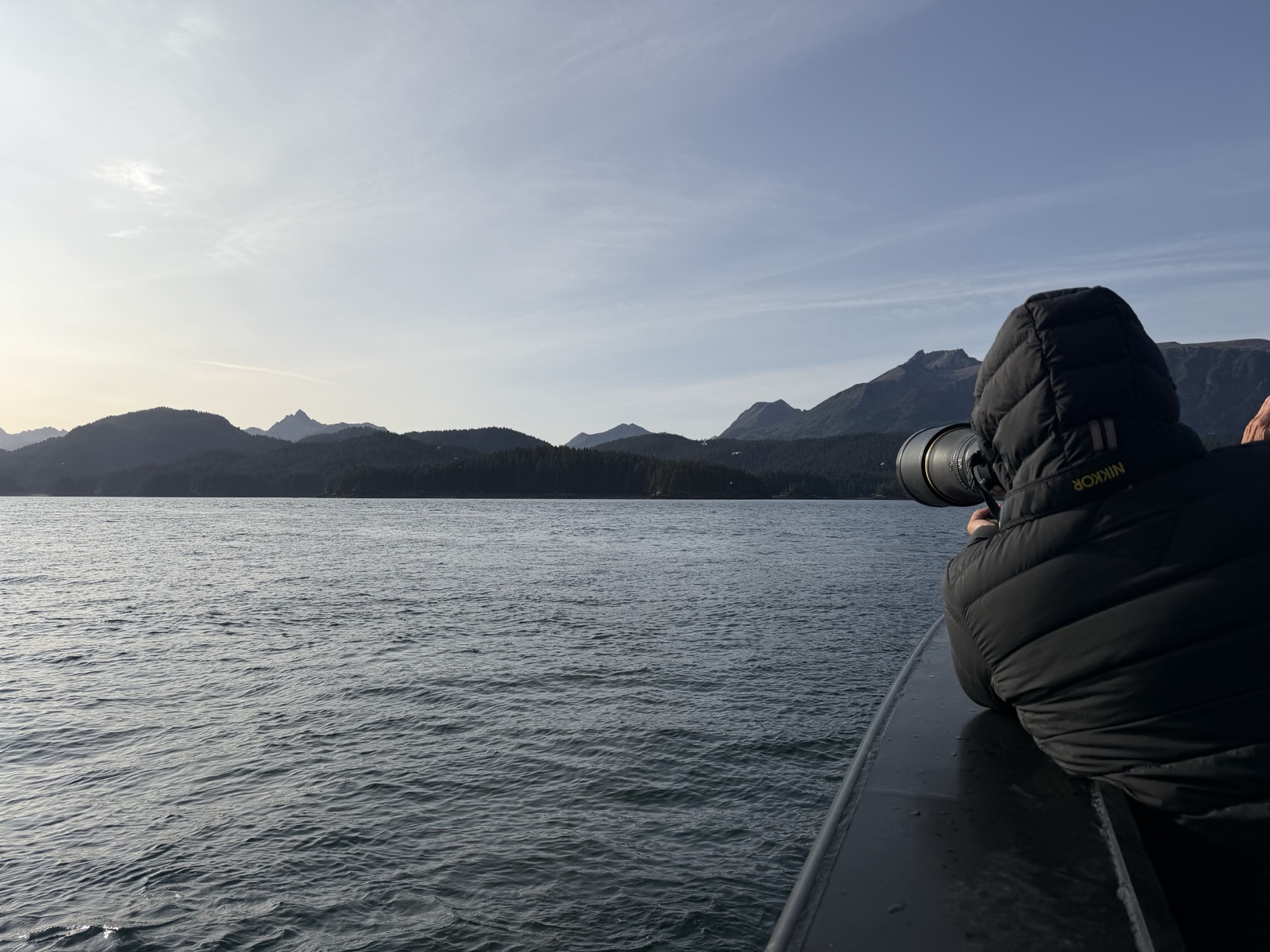
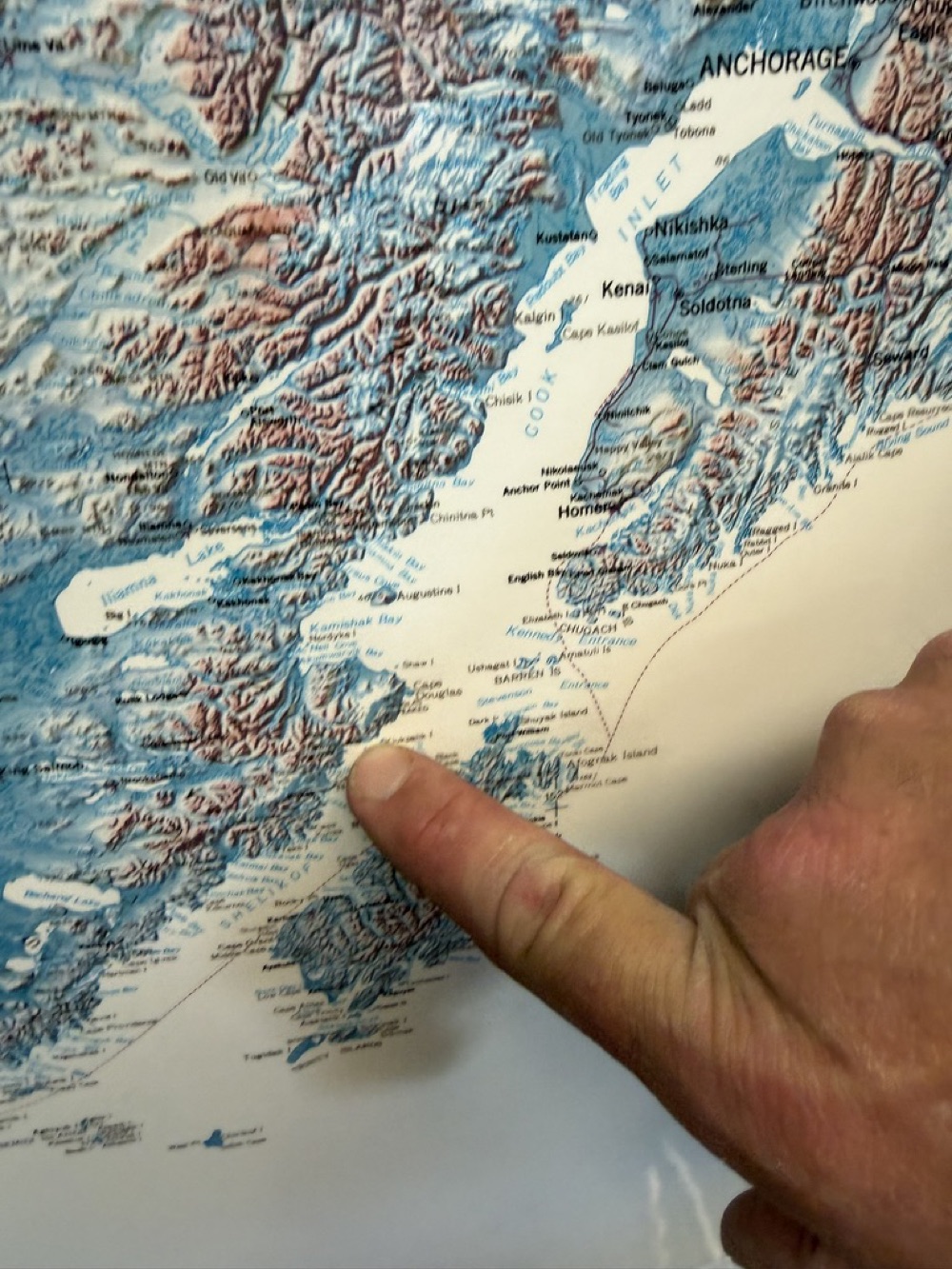
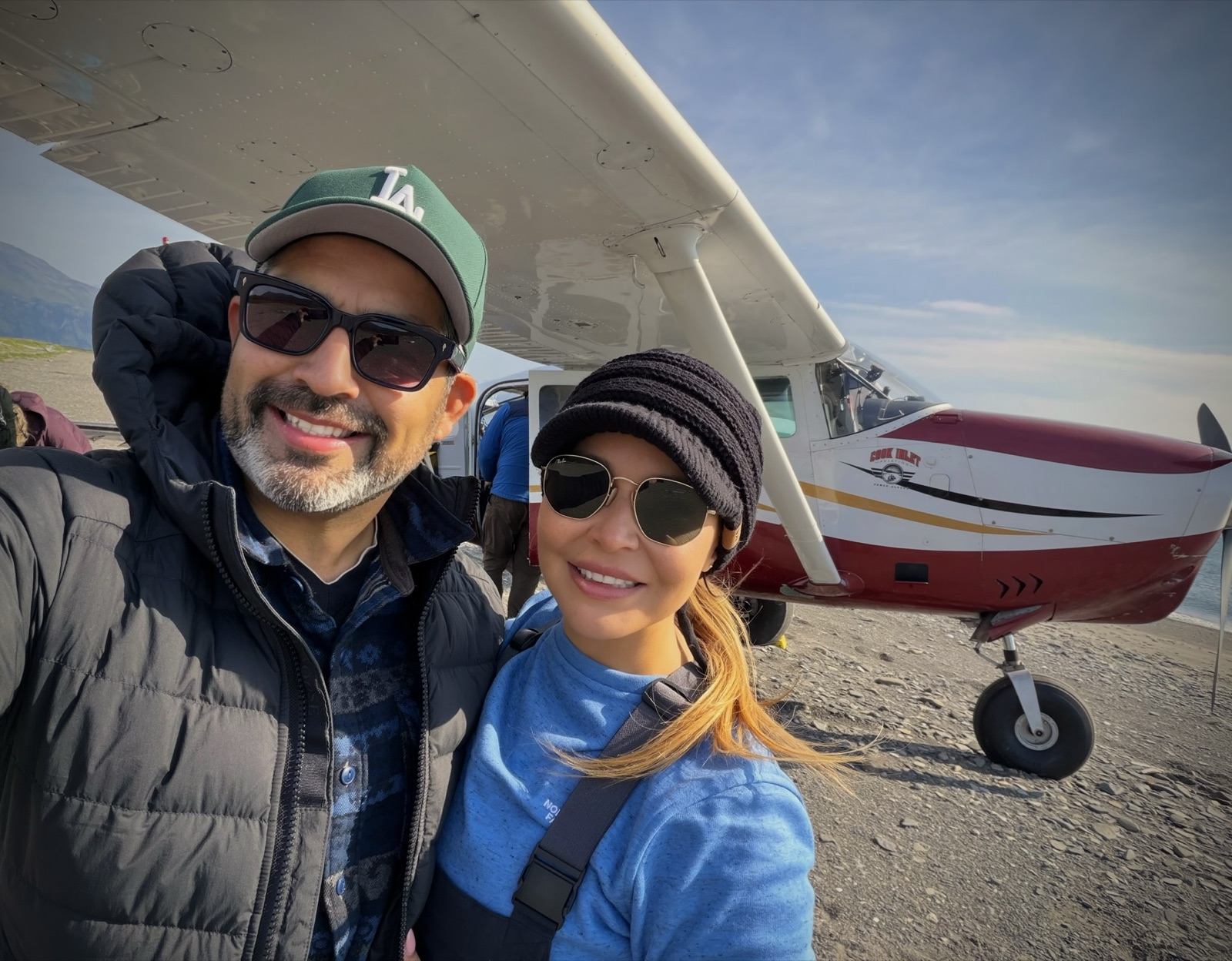
Thursday, seven in the morning, the hangar on Kachemak Drive. Hip waders fitted at the counter, a liability form, a short briefing: no bear spray, no food that crumbles, stay together, move slowly, let the bears decide the distance. Then the pilot walked us to a relief map on the wall and put his finger on a stretch of coast across the inlet, below Kamishak Bay, where the bears had been feeding that week. That was where we were going.
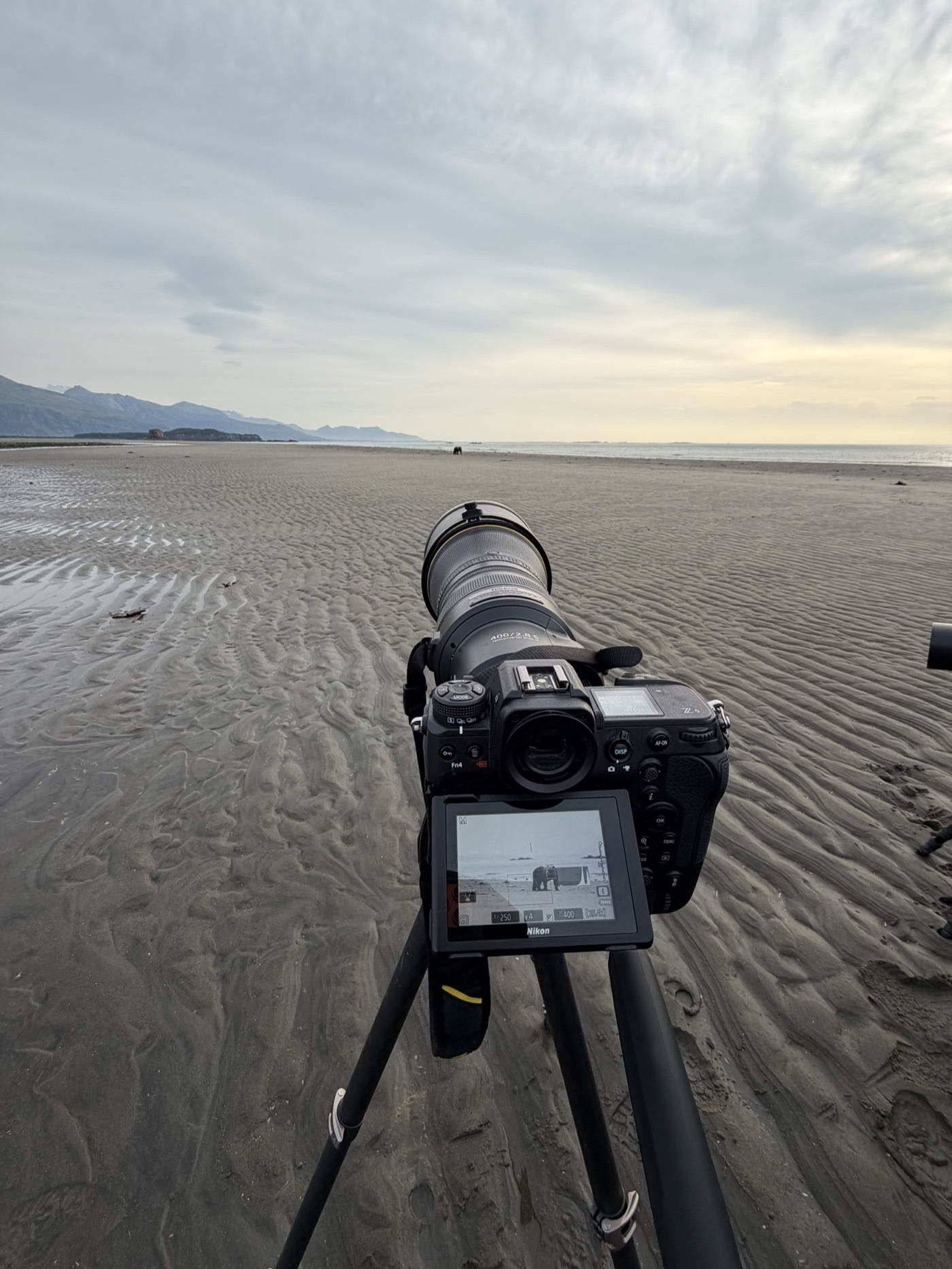
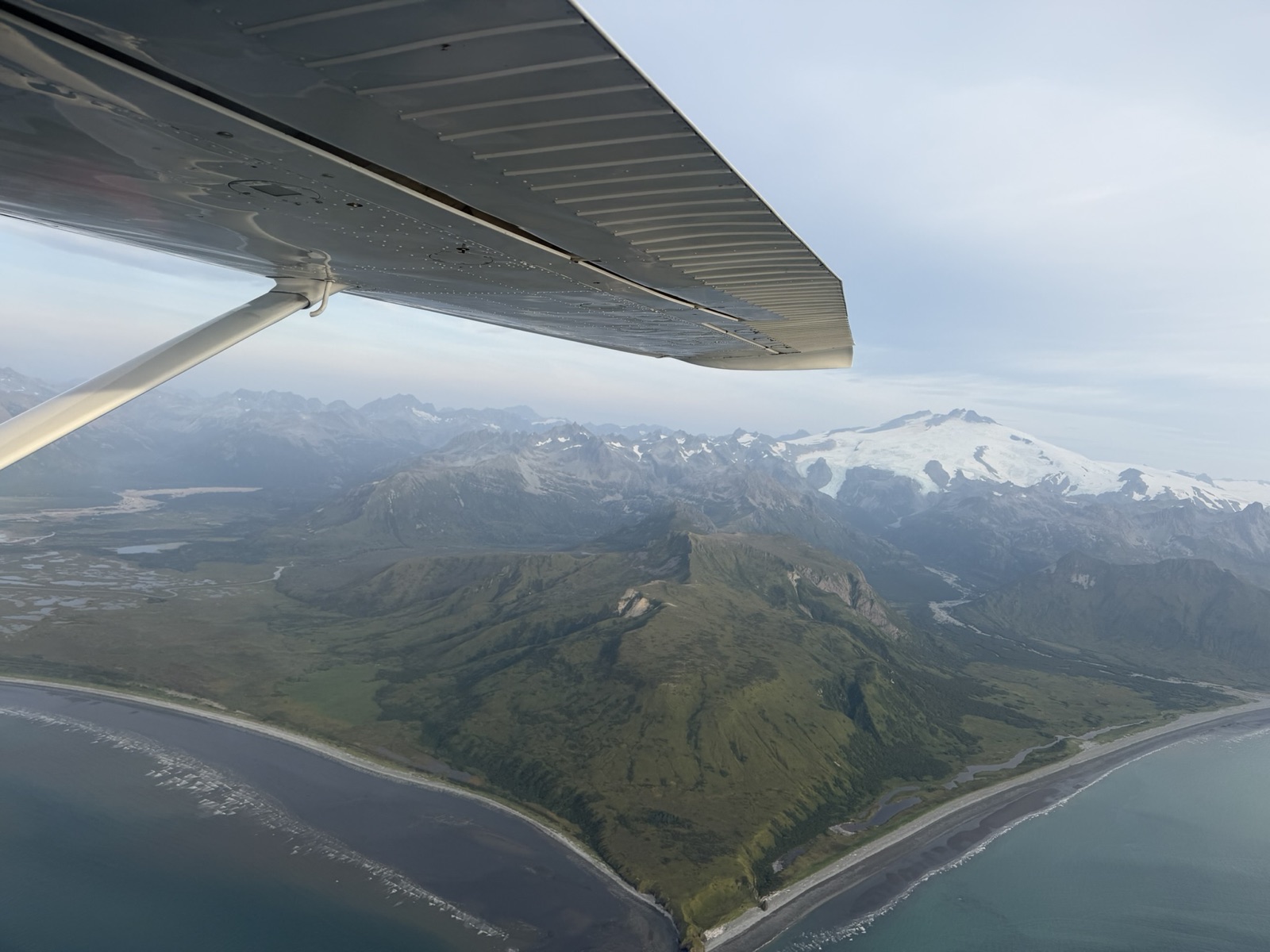
The flight across Cook Inlet is about an hour in a small plane, over water and then over a wall of glaciers, a turquoise lake tucked under one of them, and finally a green headland with a black-sand beach curving away on both sides. We landed on the beach. The plane just set down on the sand at low tide, and we stepped out into a place with no road, no building, and no sound except the surf.
The first bear was a dot a long way down the beach, walking the tide line. We set up on the flats, low, and let it come. That is the whole method out here. There are no platforms and no viewing areas on this coast, which is why we chose it over the famous falls. You sit on damp sand with the camera at bear height, and the bears, who have seen people in this spot every summer of their lives and been given no reason to care, go about their morning around you.
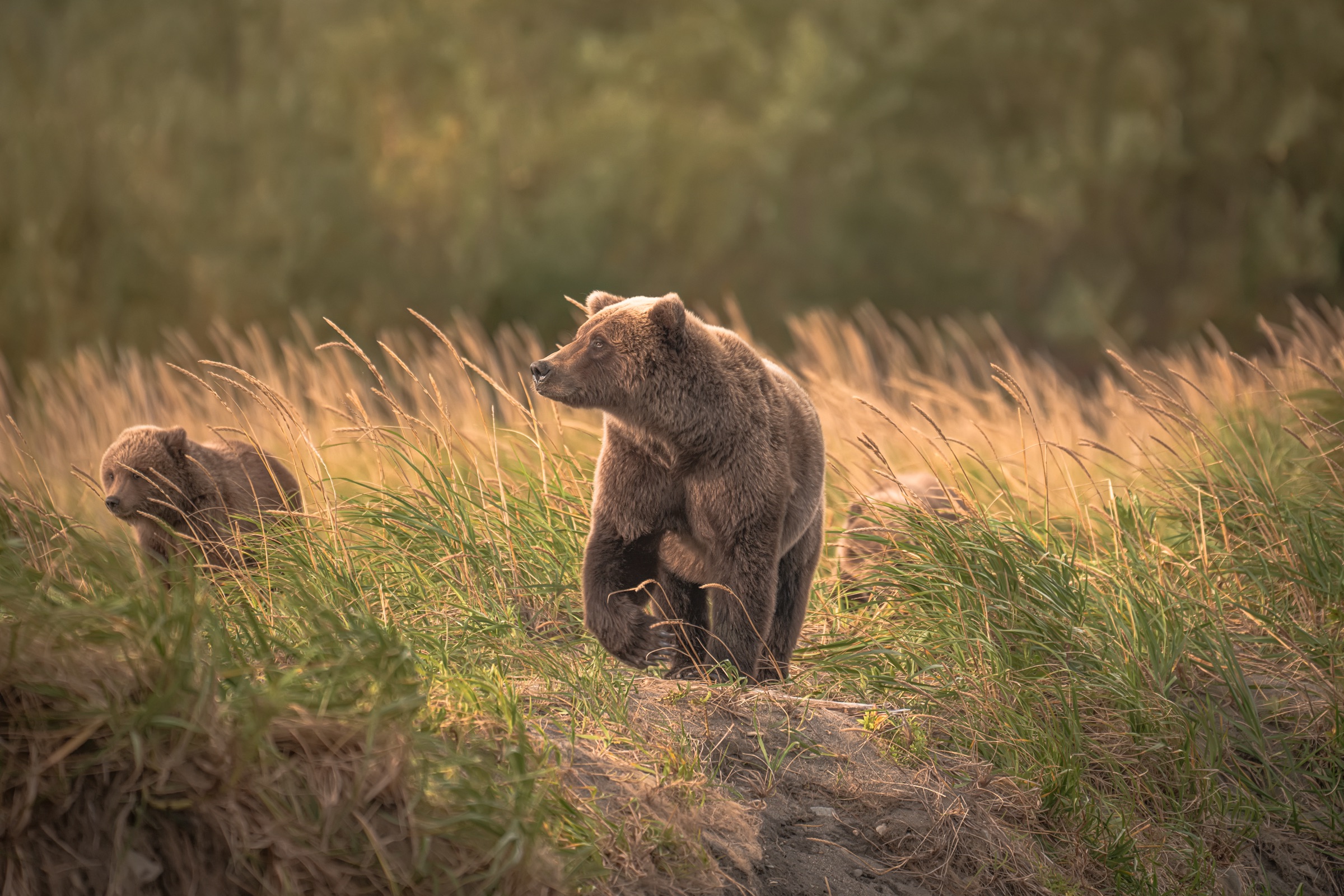
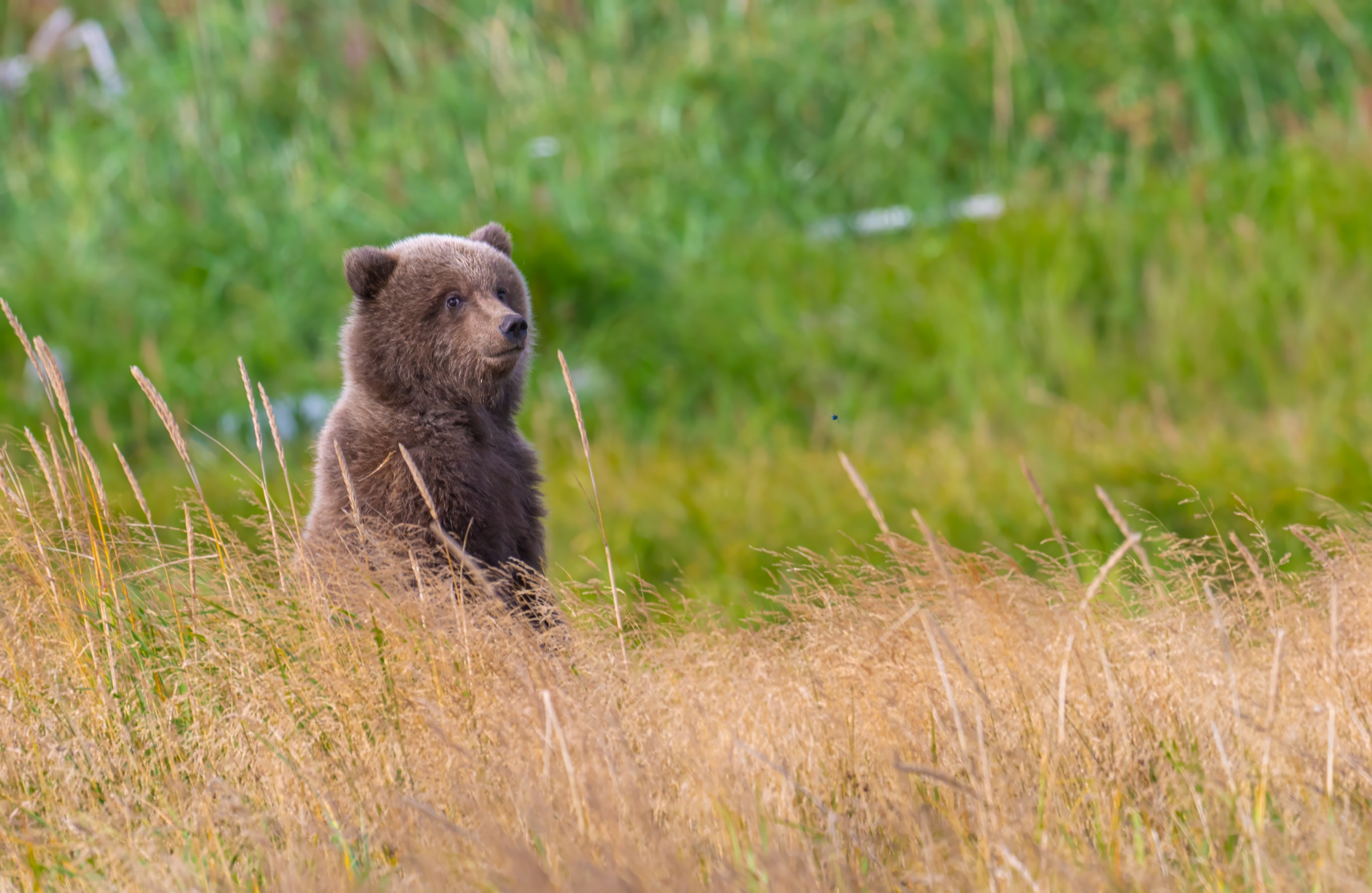
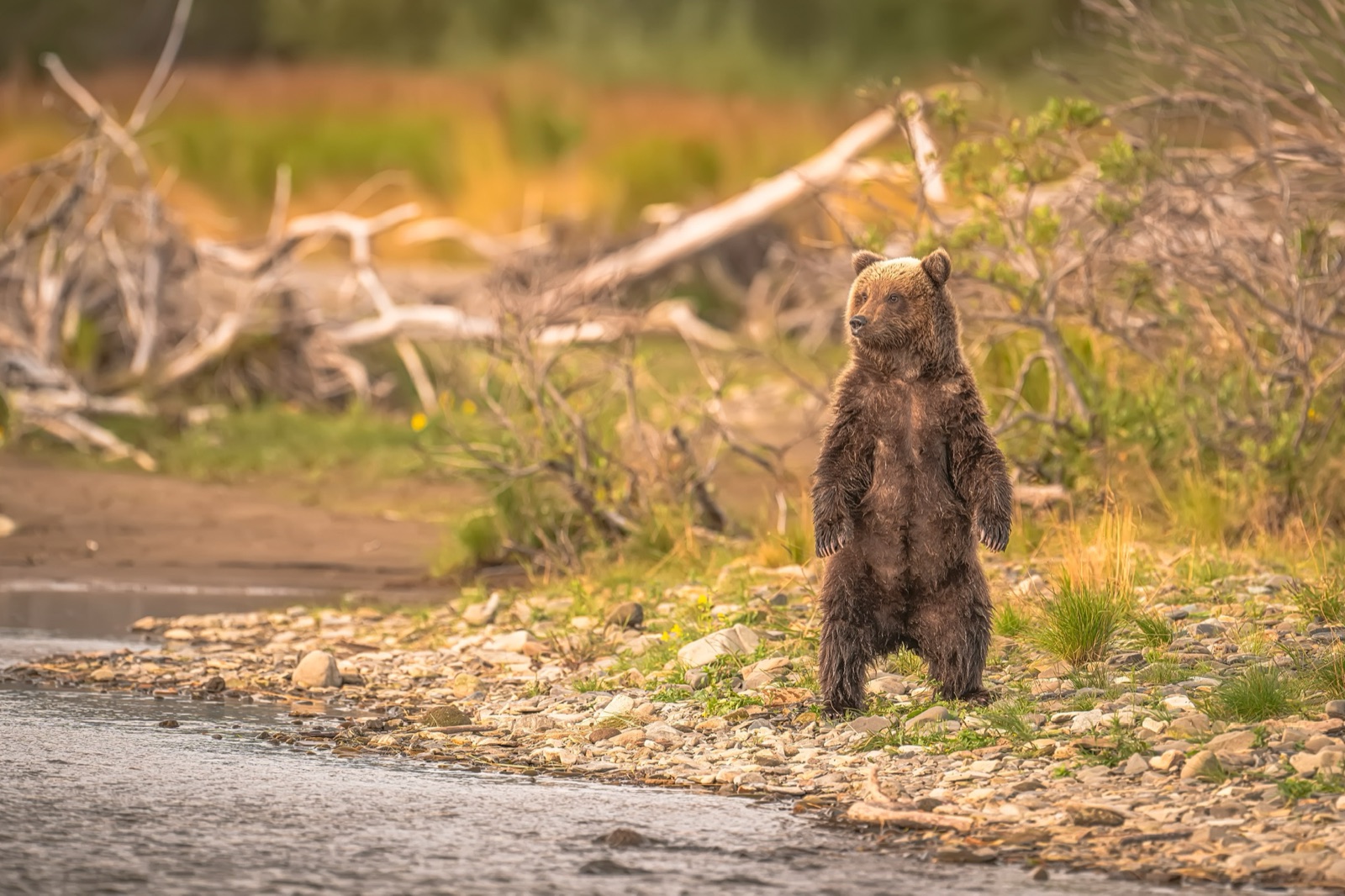
Up the creek behind the beach, in the tall grass, we found the family. A big sow with two spring cubs, fat and glossy and already a little too confident. She was fishing the creek; they were doing everything except fishing. One climbed out onto the gravel bar and walked the edge of the water like it owned the place. The other stood up in the dry grass to see over it, and then stood up again by the driftwood, front paws hanging, with the look cubs get when they have decided something is interesting but not yet what.
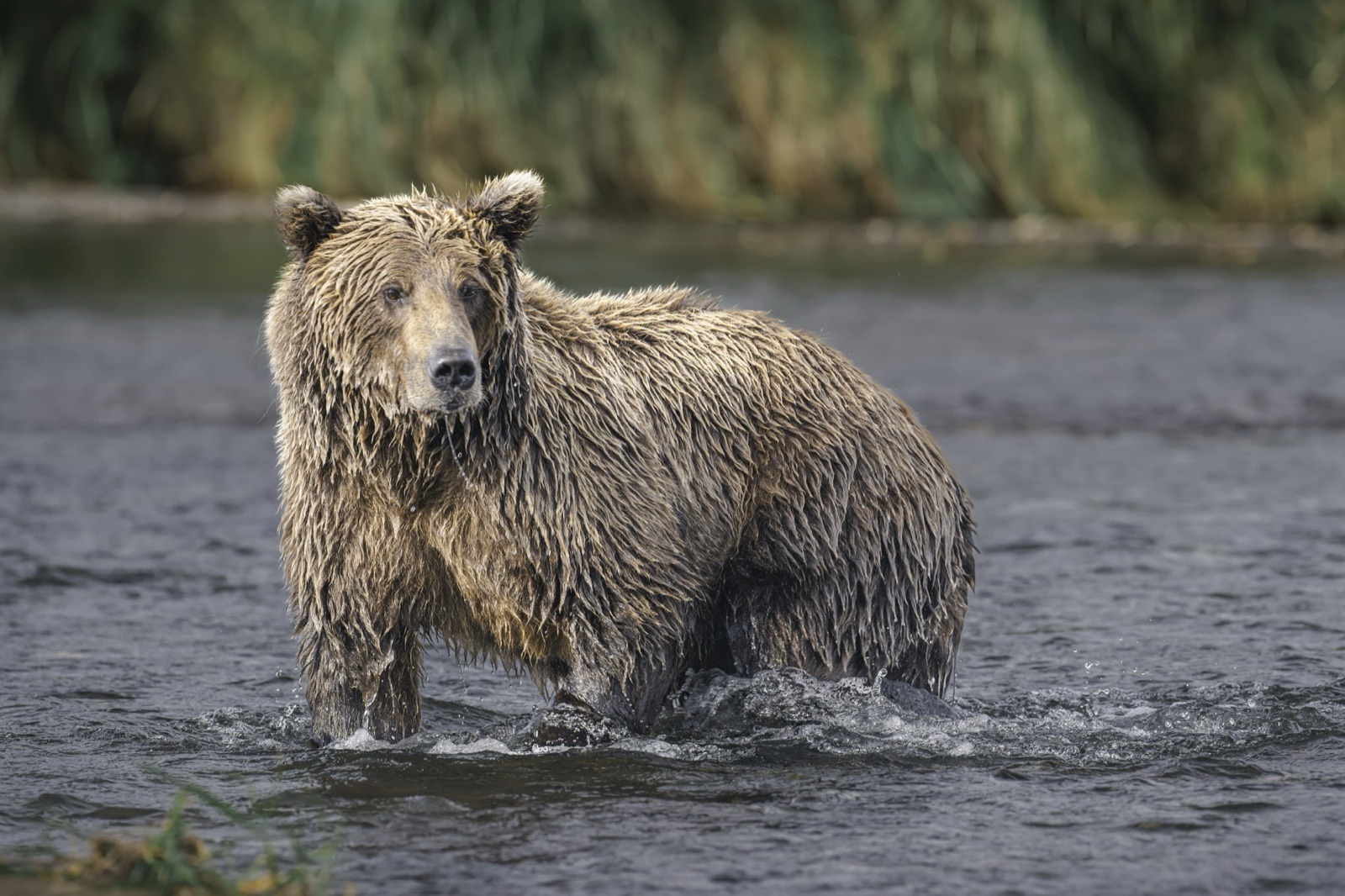
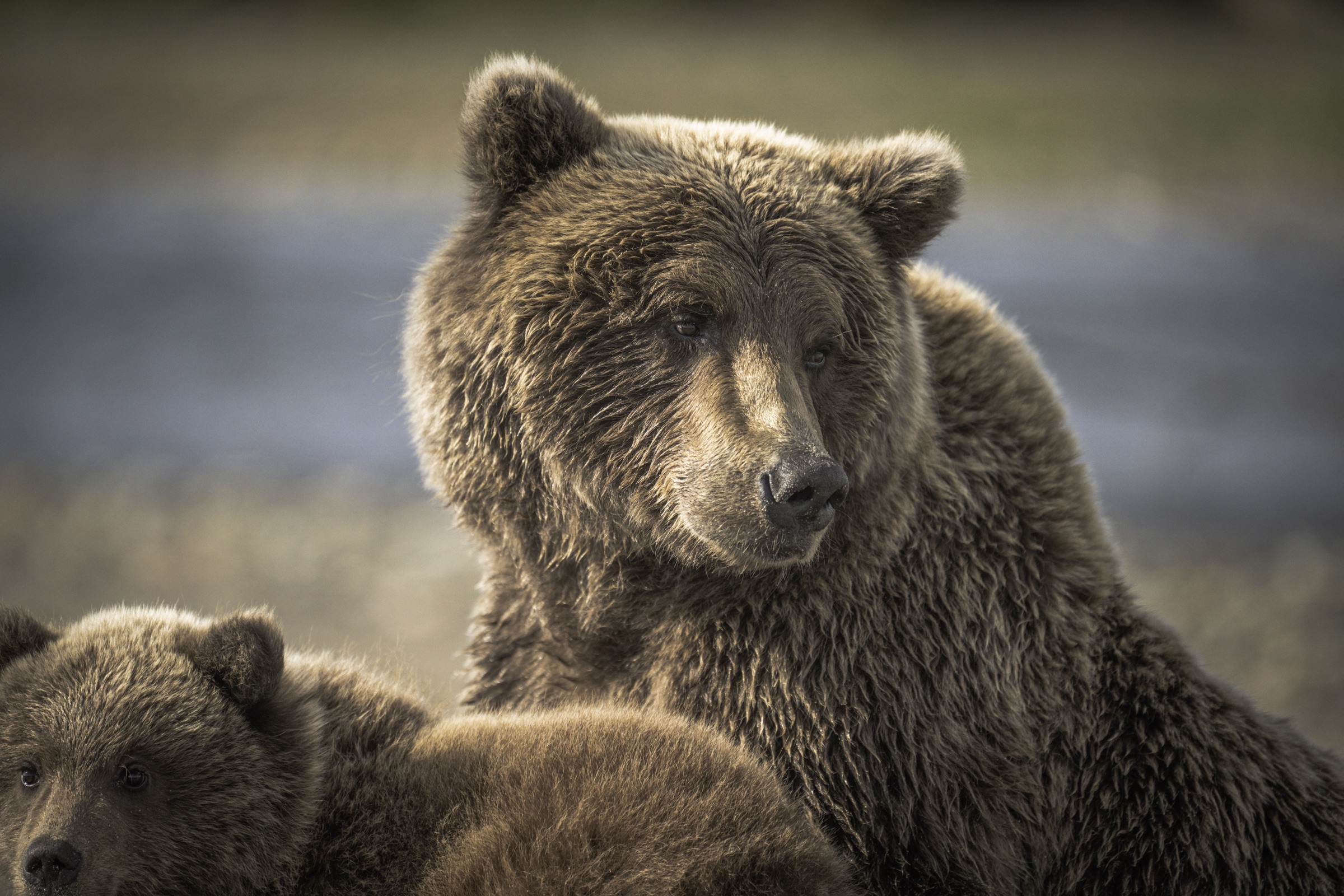
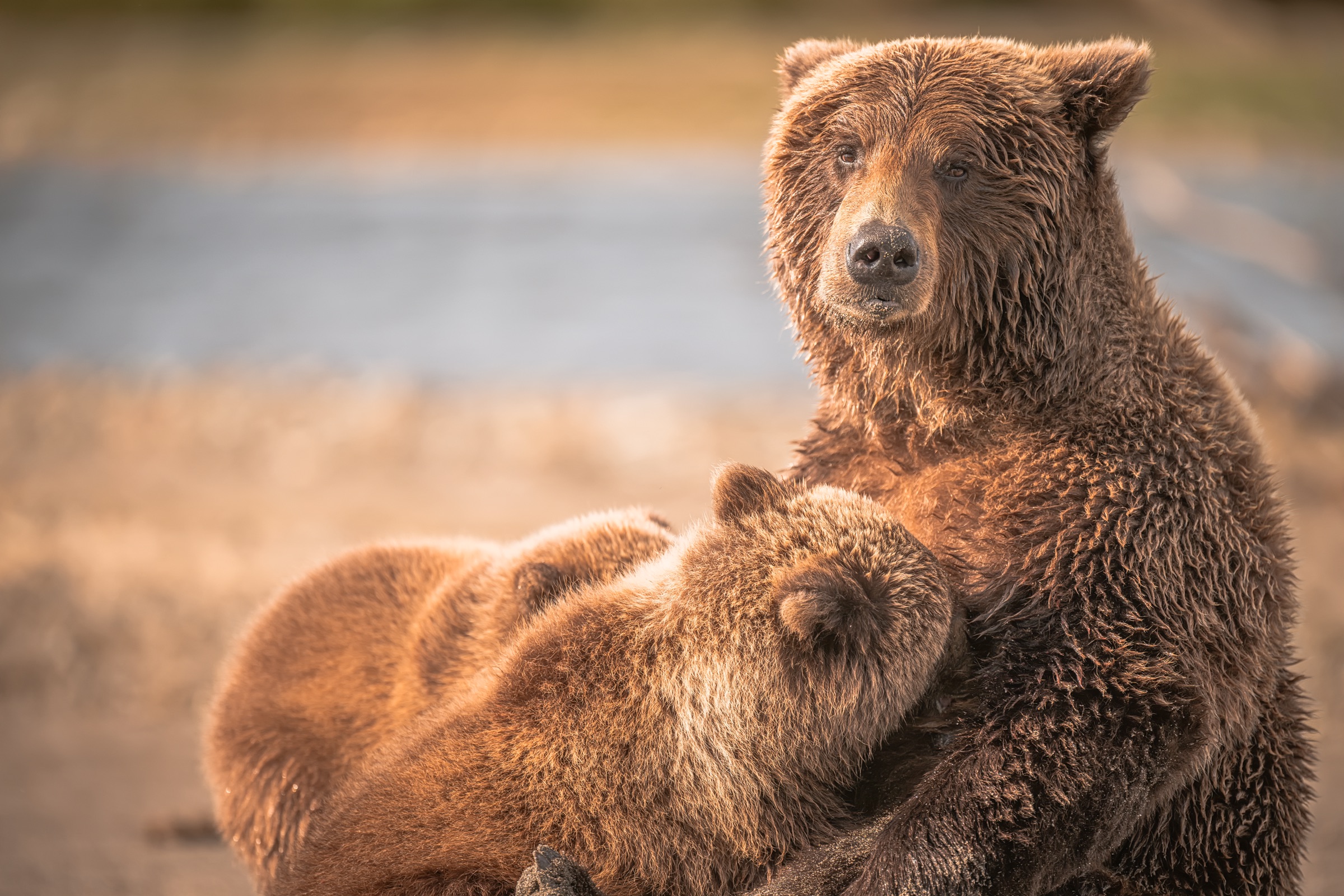
Then she came out of the water, shook off, walked up onto the sand, and lay down. The cubs were on her in seconds. She nursed them right there in the open, in full sun, twenty meters from where we sat, and for ten minutes the only thing moving in the frame was her breathing. I have photographed a lot of animals. I have not often been handed a moment like that and simply allowed to keep it.
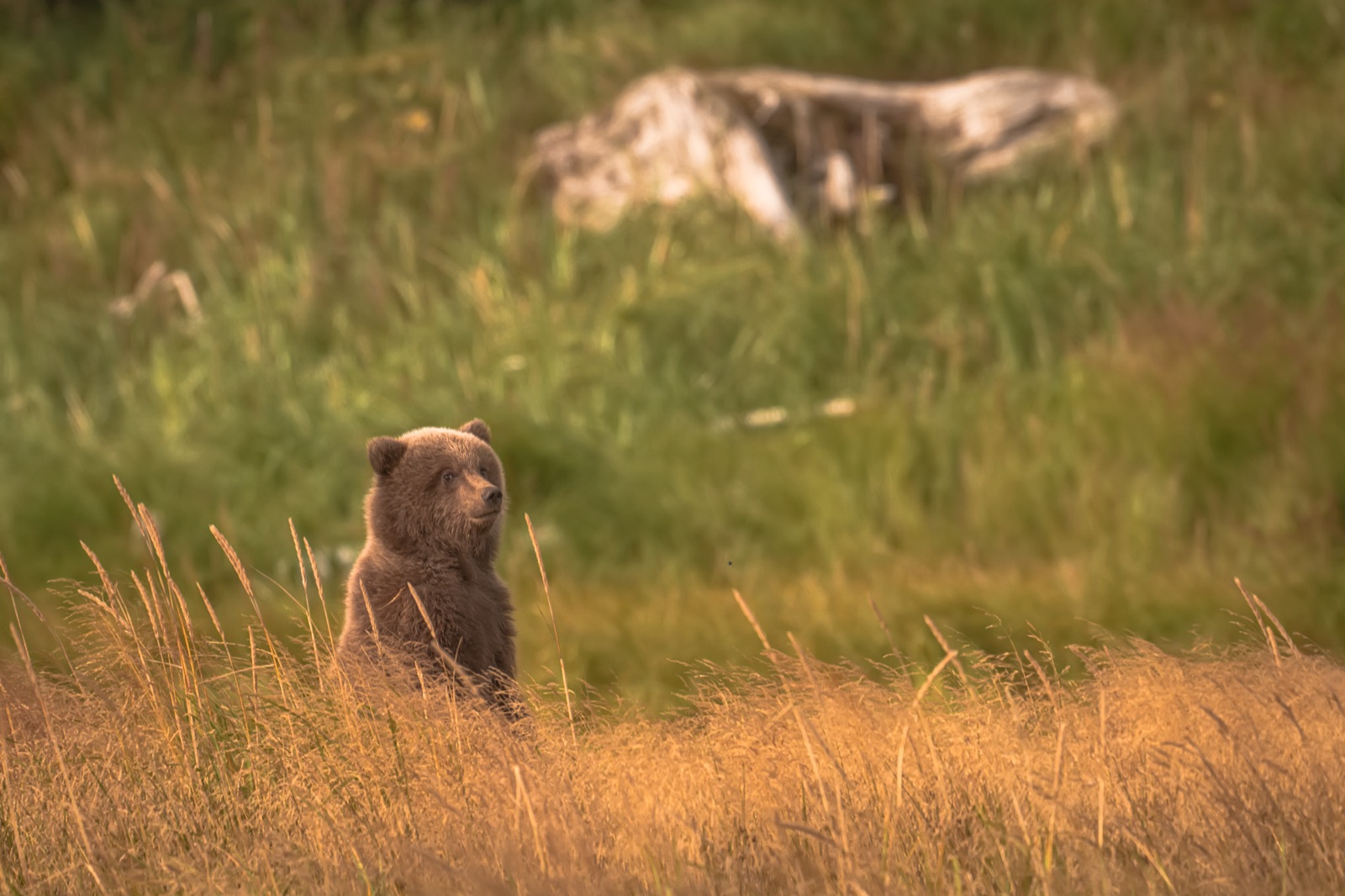
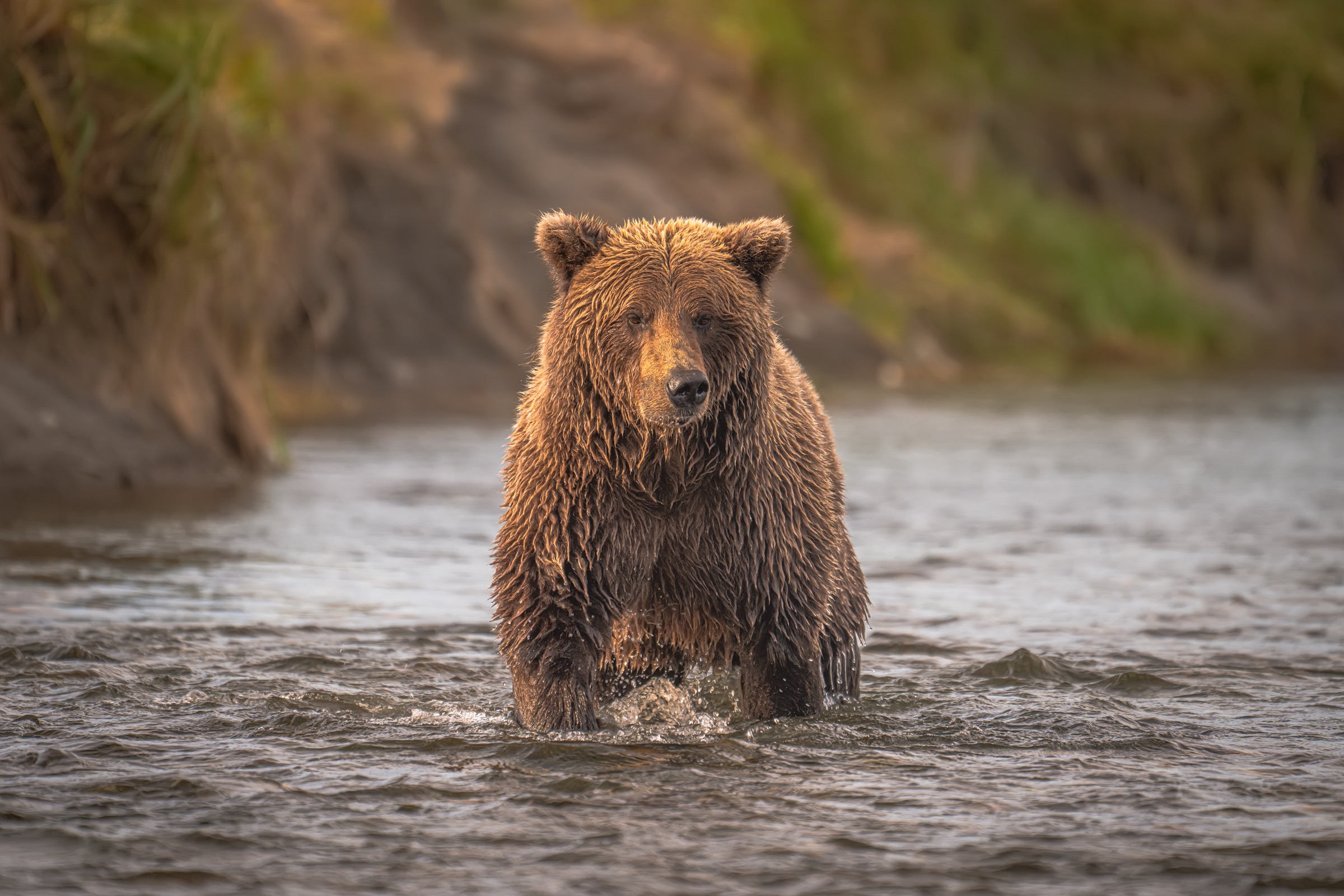
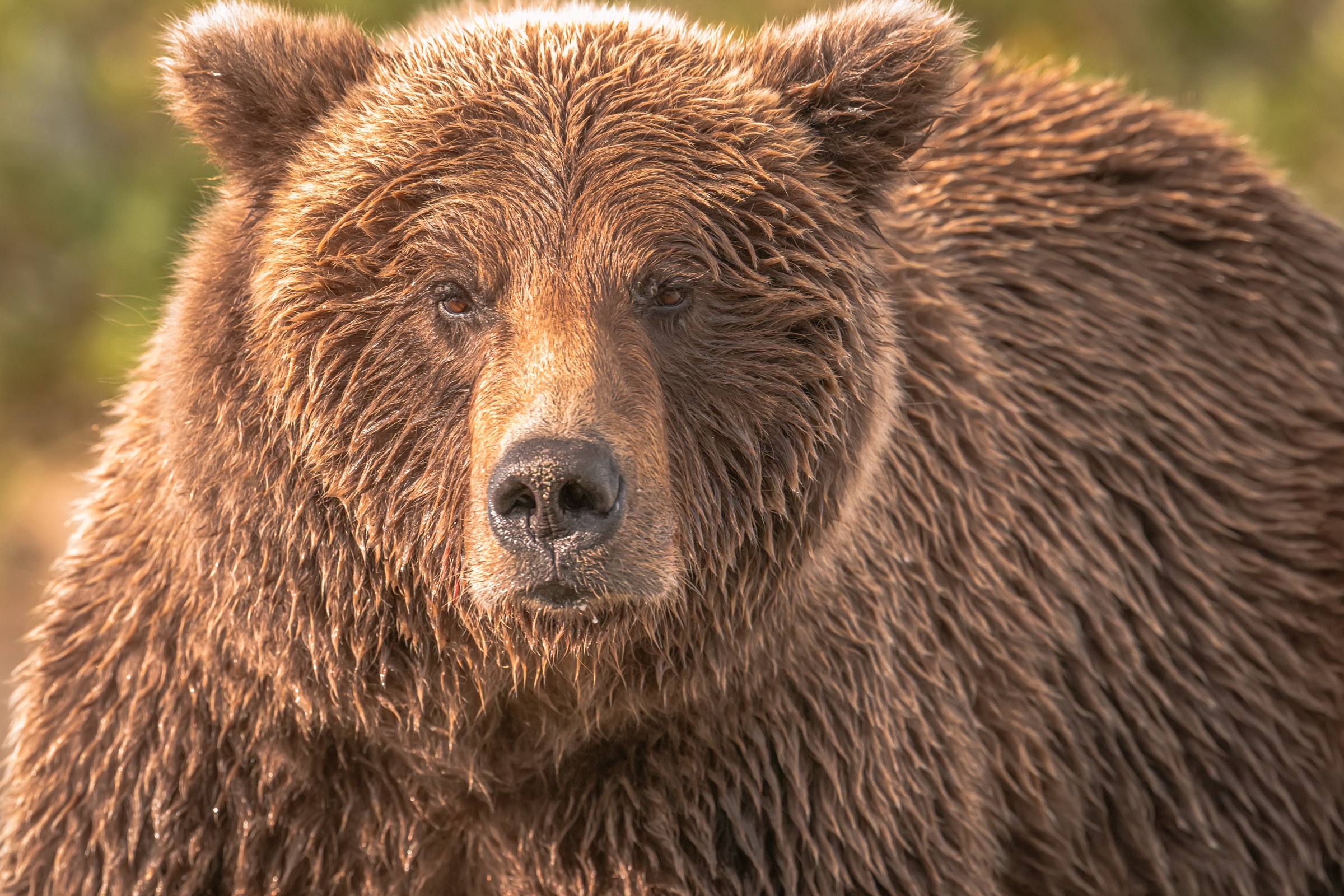
The big males kept to the river. One came straight up the channel toward us with the water running off his coat, stopped, looked, and went back to the business of salmon. Another caught one in the shallows and ate it standing, head down, the way a bear eats when it has eaten a thousand of them. The light was low and warm the whole time, the kind of light you normally get for twenty minutes in an evening, and it just stayed.
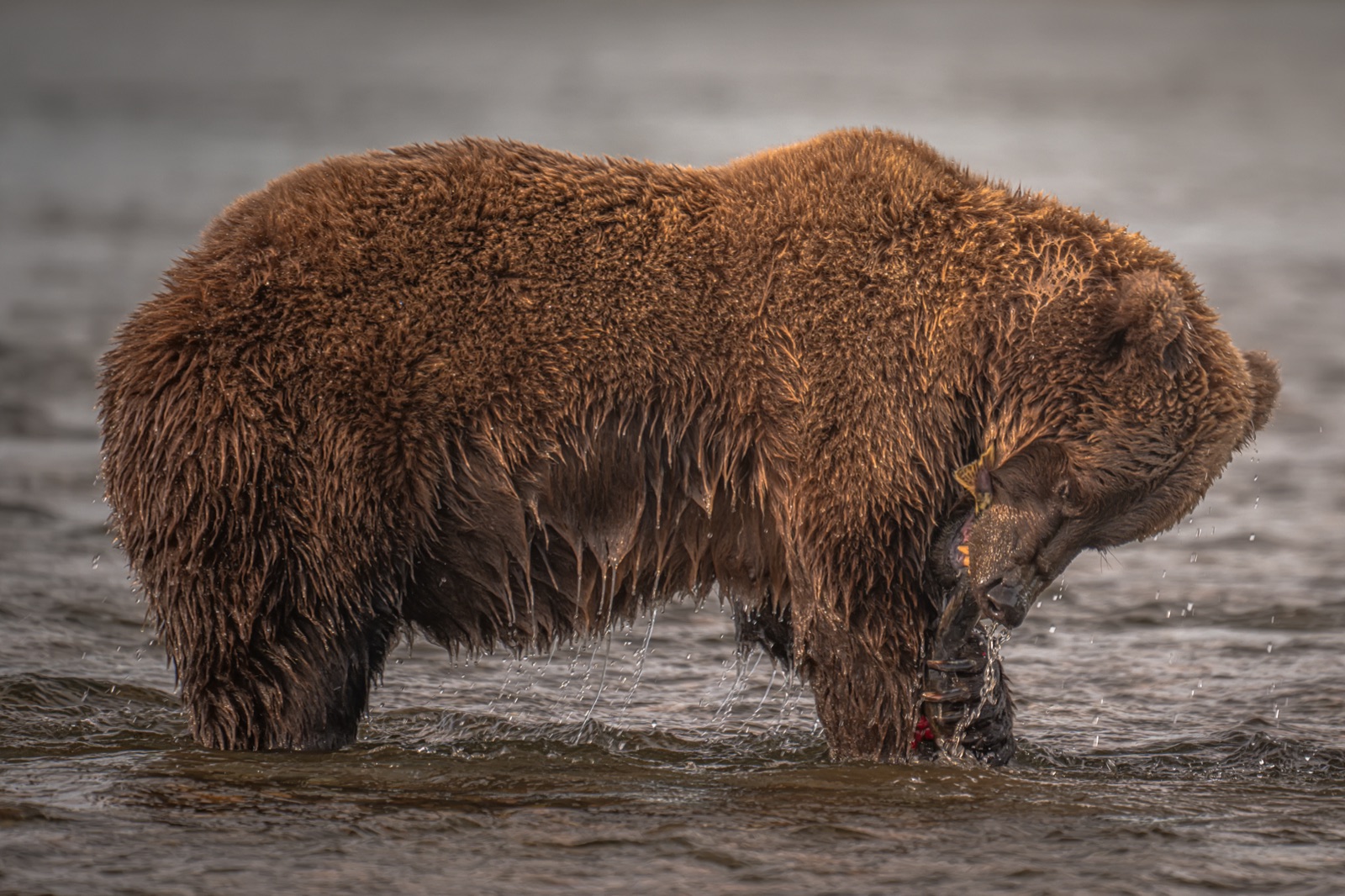
At one o'clock the tide was coming back over the flats and the pilot wanted the beach while it was still a runway. We walked back past the sow, who lifted her head and put it down again, and left the coast exactly as we found it. Then we flew home across the inlet to Homer, which had, in the meantime, turned into a small town with a hangar and a taxi and nothing in it that could compare.
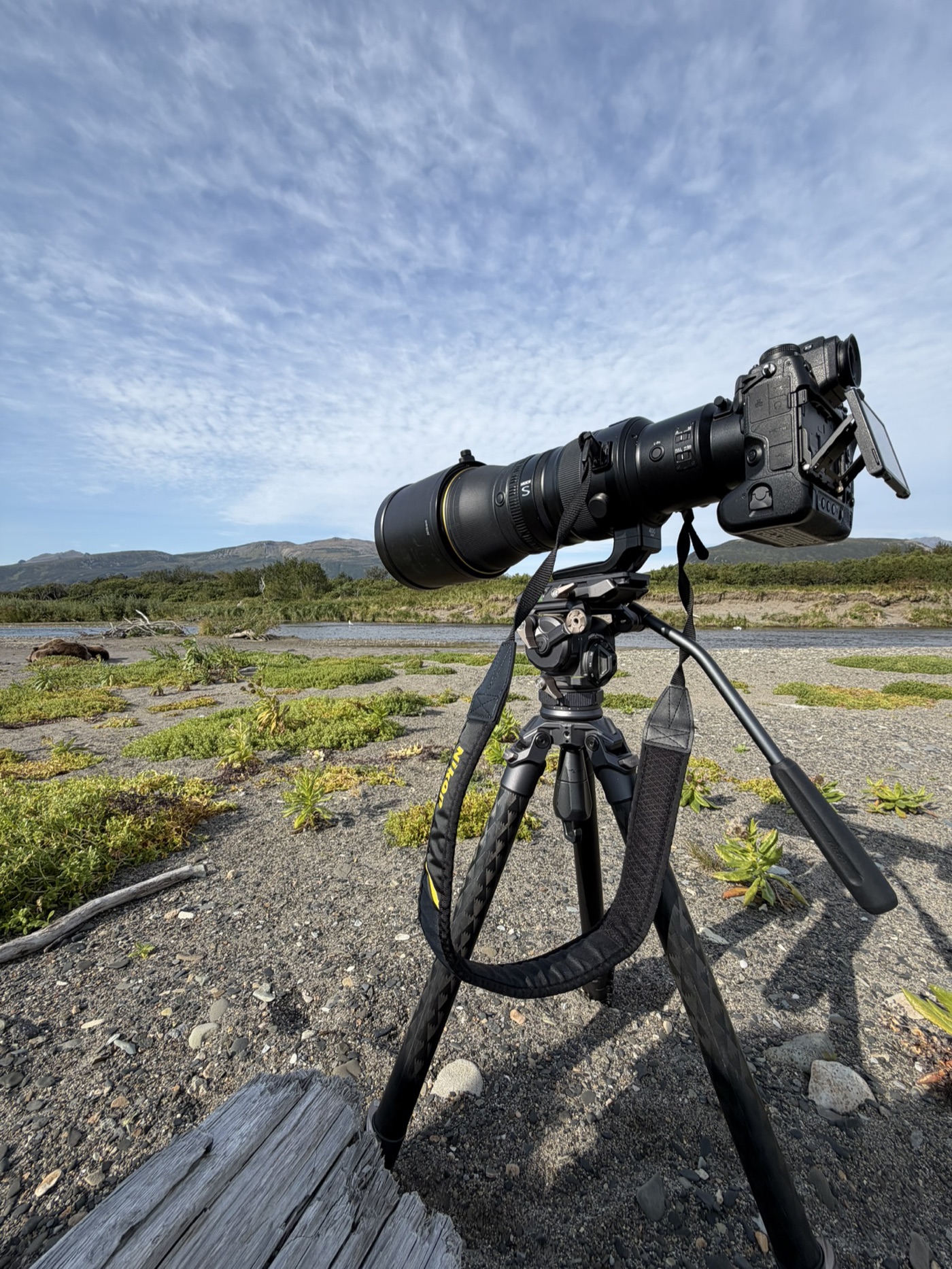
The photographs below are from that one morning. They are the reason we built five days around it.
— Javier Mendoza · Katmai coast, Alaska · September 2026