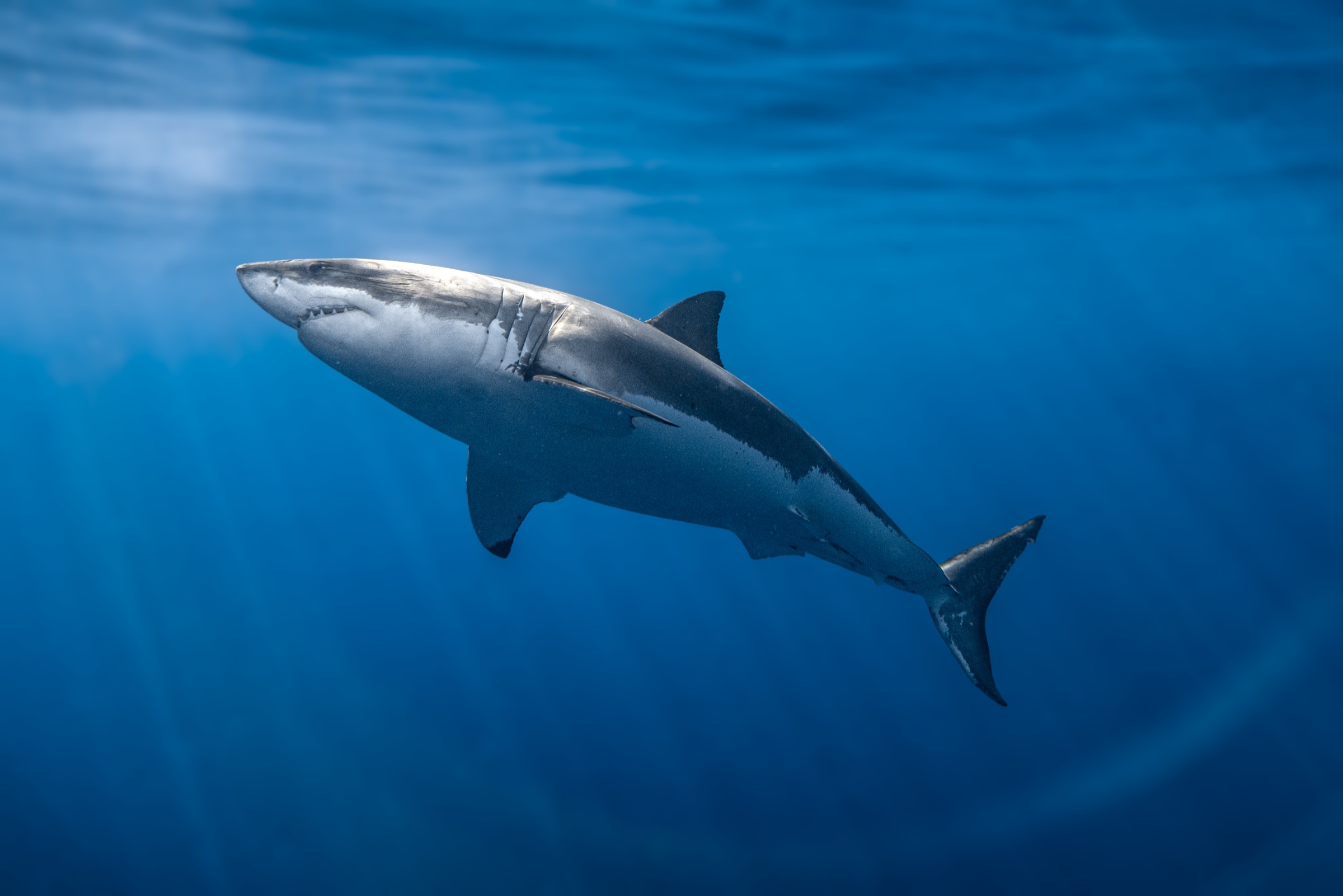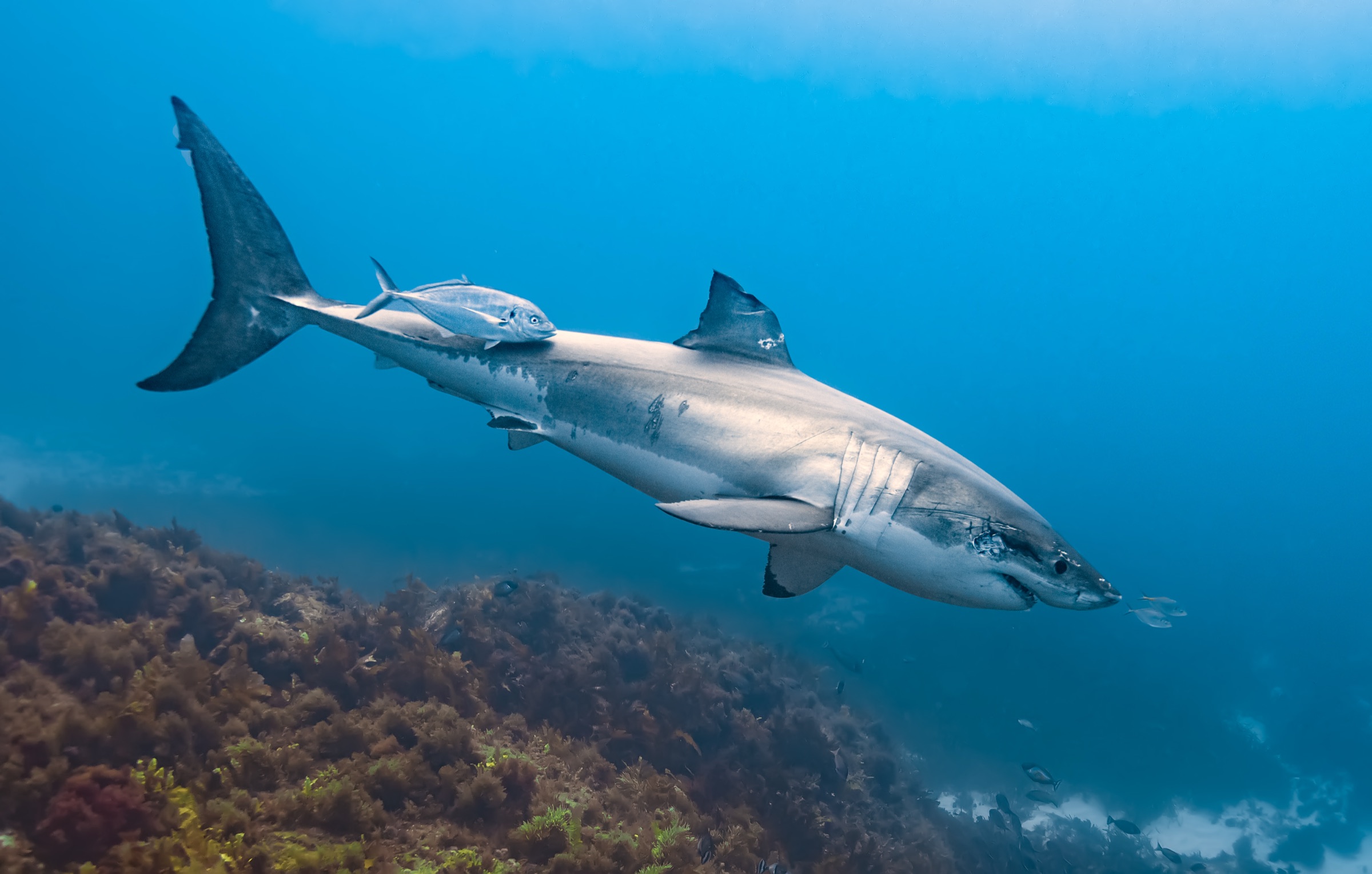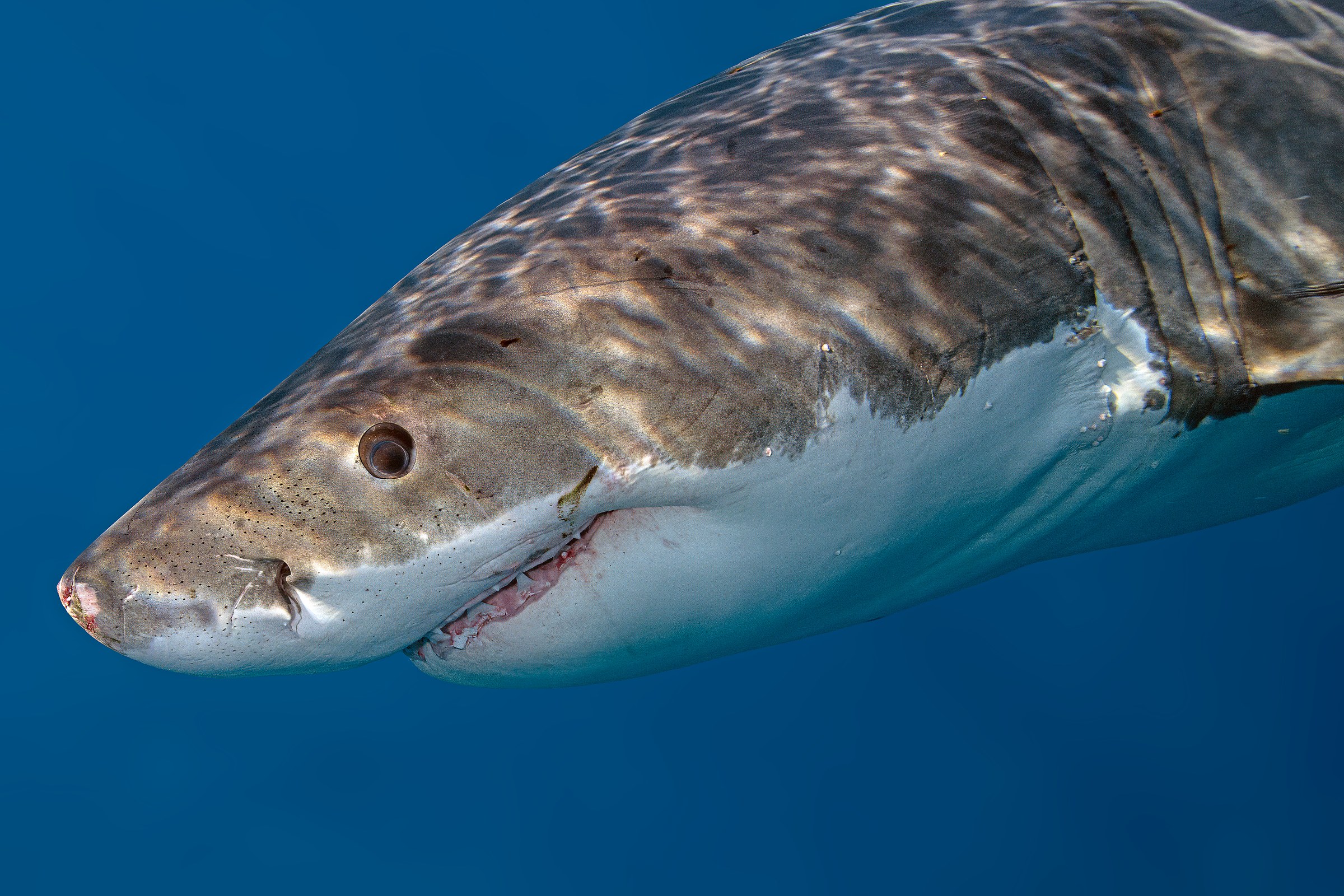
The animal
Great whites are warm-bodied, which lets them hunt in cold water and cover huge distances; tagged sharks swim from California to Hawaii and from South Africa to Australia. Adults hunt seals and sea lions from below, often in a single rush; juveniles live on fish and rays in shallow water.
Their teeth are serrated triangles replaced throughout life. The famous bite is usually a test; most encounters with people are a single investigative bite, which is why the majority are survived.
Where they are photographed
The Neptune Islands off South Australia and Guadalupe Island off Mexico are the two classic places to meet adult great whites in clear water. Southern California's beaches are a nursery for juveniles, and adults gather around the Channel Islands and the Farallones each autumn.
The species is listed as Vulnerable. California has protected white sharks since 1994, and the population off the US West Coast appears to be slowly recovering, one of the few good news stories among big sharks.
A longer guide to this species, with what it means for Southern California, is on My Clean Ocean → · Field story: read it →