Javier Mendoza  /  The Animals  /  Ocean
Sharks · Ocean

Blue Shark

Prionace glauca

Slim, sapphire-backed and curious to the last inch, the blue shark is found in every ocean and is caught in greater numbers than any other shark.

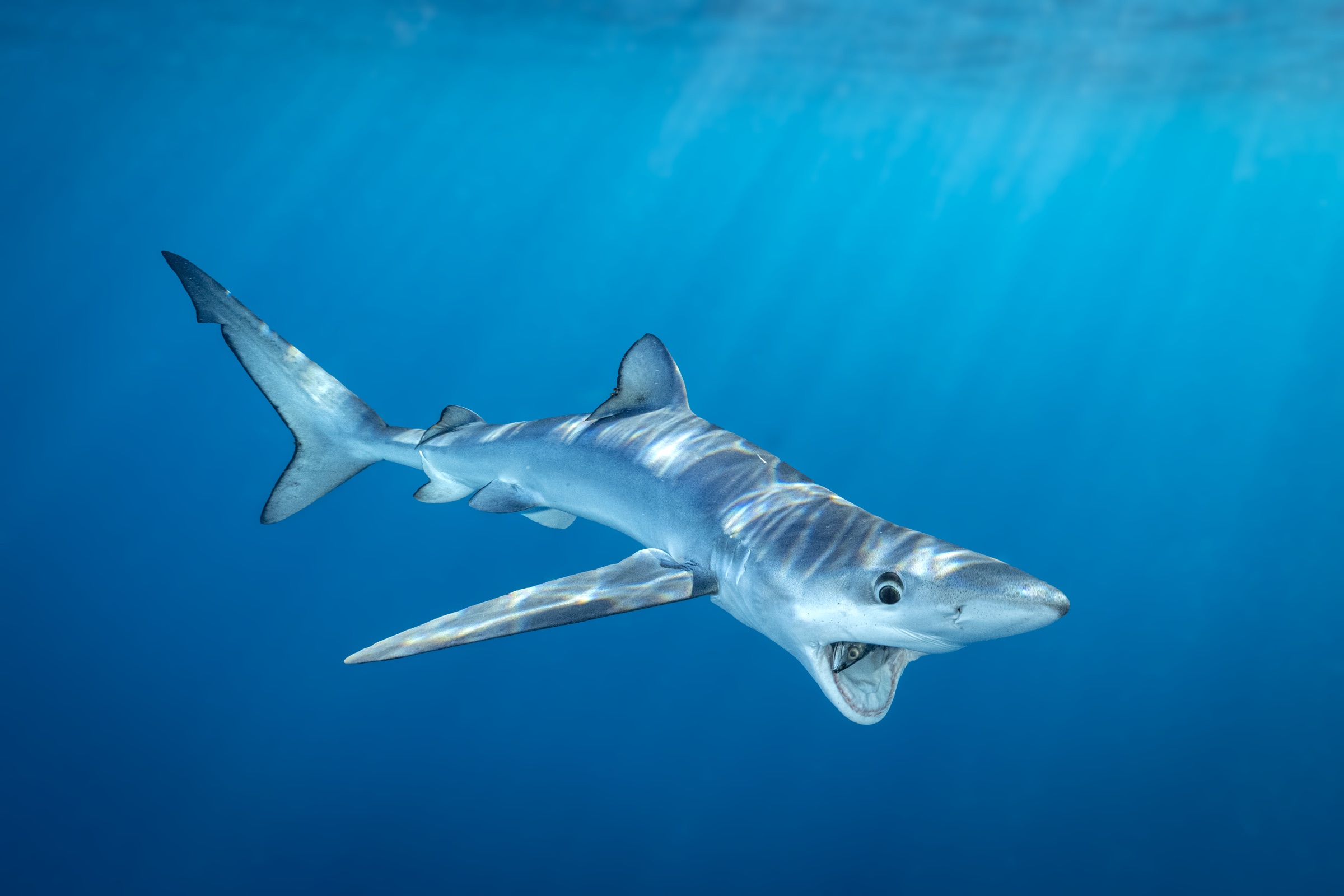
A blue shark up close with its mouth open, lit by shafts of sunlight slanting through clear blue water.
Big Blue · California · © Javier MendozaOrder this print
~12 ft
Maximum length; most are 6 to 9 ft
NOAA Fisheries
Every ocean
Temperate and tropical seas worldwide, the widest range of any shark
IUCN
~35 pups
Average litter, with litters over 100 recorded
NOAA Fisheries
Near Threatened
IUCN Red List; tens of millions caught each year
IUCN

The wanderer

Blue sharks cross whole oceans, following squid and small fish along temperature fronts, and tagged animals have travelled from New England to Brazil and from California across the Pacific. They are slender and long-finned, built for efficient distance rather than speed, and approach boats and divers readily.

Off California they assemble over deep water beyond the Channel Islands from late spring through fall. In the blue-water encounters they come close enough to touch the dome port, which is what the frames below record.

Status

Blue sharks are the single most caught shark in the world, taken by the tens of millions each year as bycatch on tuna and swordfish longlines and for their fins. Large litters have so far kept the species at Near Threatened rather than worse.

A longer guide to this species, with what it means for Southern California, is on My Clean Ocean →
In the collection

3 frames · prints from 12″ to 40″+
A blue shark up close with its mouth open, lit by shafts of sunlight slanting through clear blue water.
Big BlueCalifornia

Curious to the last inch, a blue shark comes straight to the dome port with its mouth agape — sun shafts raking its flanks silver and sapphire.

View & order this print →
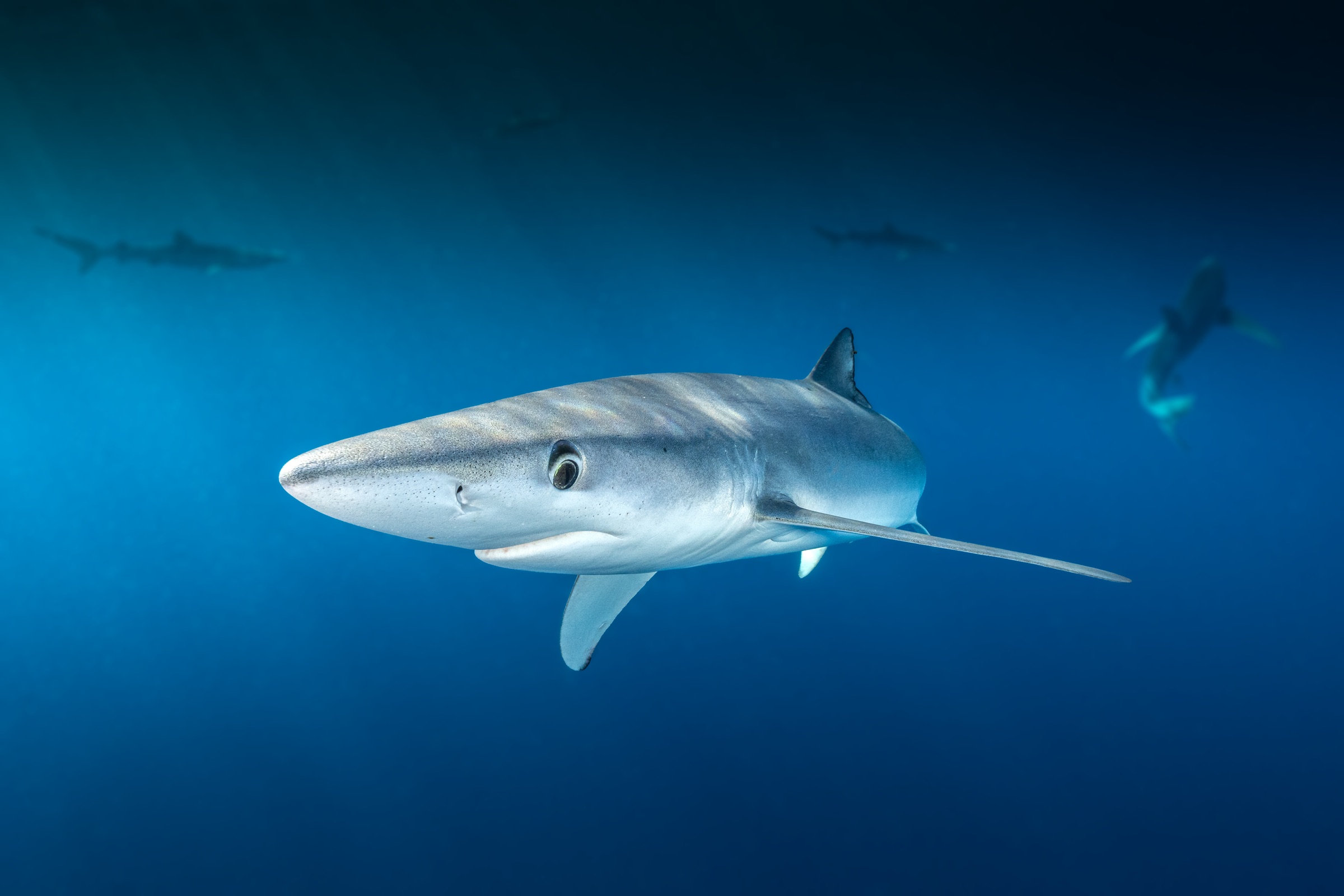
A blue shark gliding close to the camera in deep blue water, with several more sharks silhouetted in the distance behind it.
The GatheringCalifornia

One blue shark leads the camera while the rest of the gathering hangs back in the haze — offshore California, where the blues assemble over deep water.

View & order this print →
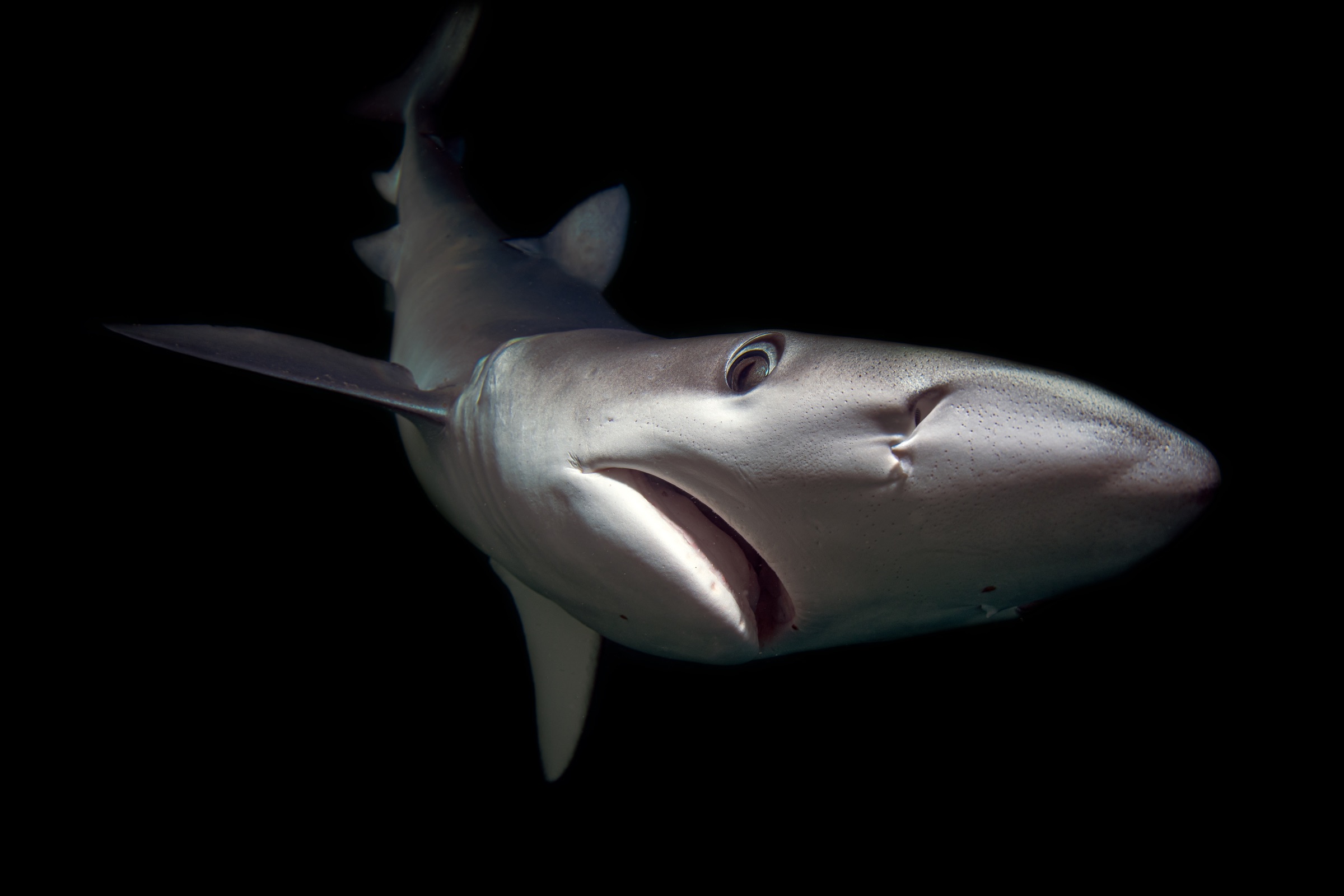
A blue shark emerging from pitch-black water into the strobe light, head turned toward the camera, mouth slightly open.
Out of the DarkMexico

On a black-water dive a blue shark slides out of the void and into the strobes — silver, wide-eyed, and utterly silent. The ocean at night keeps its own company.

View & order this print →
Own the photograph
Museum-quality prints from 16-bit masters — metal, canvas or archival fine-art paper, printed in the USA.
Order a print

Questions people ask

Are blue sharks dangerous?

Rarely. Blue sharks live far offshore and are curious rather than aggressive; recorded incidents with people are very few and mostly involve provoked animals or shipwreck survivors in open ocean.

How big do blue sharks get?

Most are 6 to 9 feet long. The largest reach about 12 feet and around 400 pounds.

Why is the blue shark the most fished shark?

It is caught in enormous numbers as bycatch on longlines set for tuna and swordfish across the open ocean, and its fins are sold. Estimates run to about 20 million a year.

Sources
  1. NOAA Fisheries species profile: Blue shark
  2. IUCN Red List, Prionace glauca
  3. FAO and ICCAT blue shark stock assessments
More animals
Great White SharkThe ocean's most storied predator Shortfin Mako SharkThe fastest shark in the world Bull SharkThe shark that swims up rivers Orca (Killer Whale)The ocean's top predator, and the largest dolphin All 17 animalsLand & ocean